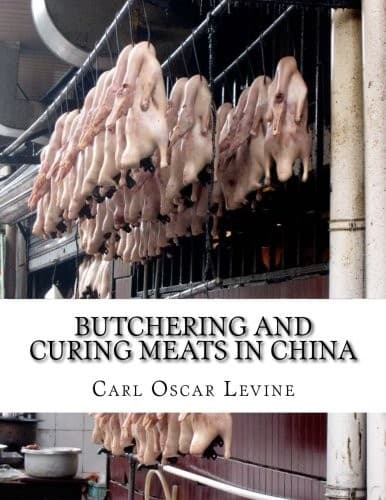
Butchering and curing meats in ChinaLevine, Carl Oscar
Science
Butchering and curing meats in China
Levine, Carl Oscar
Meat -- Preservation; Slaughtering and slaughter-houses -- China
There are three varieties of Chinese geese; the grey, white,
and brown. The grey variety is probably more generally used for
meat than are the other two varieties. It is the only variety raised
on a large scale in southern China, and its meat is of excellent
quality. Chinese geese are distinguished from other breeds of geese
by the fleshy protuberance at the base of the bill and front of the
skull.
Selection of Animals for Slaughter
§ 6. Health
In the selection of animals for slaughter health should be given first
consideration. Even though the animal has been fairly fed and carries
a prime finish, the best quality of meat cannot be obtained if the
animal is unhealthy. If the animal has fever or serious derangement of
any kind, the meat will not be wholesome. There is little direct
evidence of harmful results from the use of animals in the first
stages of such diseases as tuberculosis, cholera, plague, rinderpest,
and such diseases, but the only safe course is to discourage the use
of any animal for food that is known to be in imperfect health. The
keeping qualities of meat are always impaired by fever or other
derangements of the system. Bruises, broken limbs, and like accidents
all have the same effect on the meat as ill health, and unless the
animal can be dressed immediately after such accidents, it is best not
to use the meat for food. This is especially true if the rise in
temperature, which usually results from such accidents, has been 2
degrees F. or more. A rise in temperature just before slaughtering
usually results in a stringy, bluish meat, which is difficult to cure.
Animals should not be butchered while in heat, as the meat of such
animals will be strong, and cannot be cured, as it sours quickly.
§ 7. Condition
First class meat cannot be obtained from animals in poor flesh.
The proper amount of fat must be present to give juiciness and
flavor to the meat. It is more important, however, that the animal
should be in good physical condition than that it should be very
fat. “Never kill an animal when it is losing flesh” is a maxim
followed by butchers. There is a good deal of truth in the saying.
When the animal is losing in flesh, the muscle fibers are shrinking
in volume and contain correspondingly less water. As a result, the
meat is tougher and drier. When an animal is gaining in flesh, the
opposite condition prevails, and a better quality of meat results.
Also, a better quality of meat will be obtained from an animal in
medium flesh, but gaining in weight, than from a very fat animal
that is neither gaining nor losing in flesh.
§ 8. Breeding
Public-domain text, read in full here on John Shaqi.
Reviews
Reviews
No reviews yet
Be the first to share your thoughts on this work.
Join the Discussion
Join the discussion
Sign in to leave a comment or review.
Sign InorCreate an account