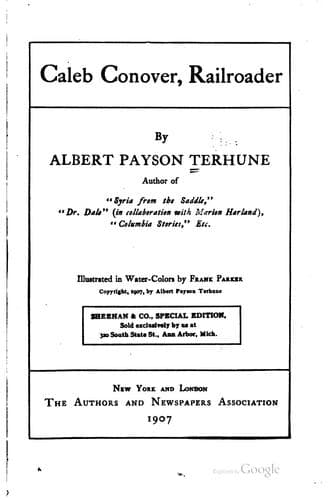
American fiction -- 20th century; Political fiction; Railroad stories; West (U.S.) -- Fiction
In the second, he had departed from his fixed habit of total abstinence.
The love of strong drink ran high in his blood. Early in life he had
decided that such indulgence would militate against success. So he had
avoided even the mildest potations from thenceforward. To-night (his
usually stolid nerves tense with the excitement of the grand cast he was
making for “social recognition”) he had felt, as never before in
campaign or in business climax, the need for stimulant to enable him to
play his awkward rôle. Moreover—he had his son, Gerald’s, high authority
for the statement—total abstinence was no longer in vogue among the
elect.
As soon, therefore, as he had taken his seat in the supper-room he had
braced himself by a glass of champagne. The unwonted beverage sent a
delicious glow through him. His puzzled brain cleared, his last doubts
of the entertainment’s success began to fade.
An obsequious waiter at his elbow hastened to refill the glass, and
Conover, his eyes darting hither and thither among the guests to single
out and dwell on the various faces he had so long and so vainly yearned
to see in his house, absent-mindedly emptied it and another after it. He
was talking assiduously to Mrs. Van Alstyne, whom at first he had found
somewhat frigid and difficult; but who, he now discovered to his
surprise, it was growing momentarily easier to entertain. He had had no
idea of his own command of language.
Supper was still in its early stages when a fourth glass of heady
vintage champagne followed the other three. From doorways and walls his
political followers looked on with amaze. To them the sight of the Boss
drinking was the eighth wonder of the world. They nudged each other and
muttered awed comments out of the corners of their mouths.
But Caleb heeded this not at all. He was happy. Very happy. The party
over which he had suffered such secret qualms and to secure the desired
guests for which he had strained every atom of his vast political and
business influence, was proving a marvellous success. At last he was in
society. And he had thought the barriers of that Body so impassable! He
was in society. At last. And talking with delightful, brilliant fluency
with one of its acknowledged leaders. He had conquered.
The waiter filled his glass for the fifth time. After all, champagne had
an effect whiskey could never equal. The fifth draught (for he allowed
but one swallow to the goblet) seemed to inspire him even more than had
its predecessors.
Then it was that fifty generations of Irishmen who, under the spell of
liquor, acquired a flow of language not their own, clamored for voice in
this their latest and greatest descendant. Now that he was in so
foreign, brilliant a mood, what more apt than a graceful little speech
of greeting to those his fellow-townsmen who had flocked thither to do
him honor? The idea was sublime. Conover rose to his feet and rapped for
silence. He would speak while the gift of eloquence was still strong
upon him.
Public-domain text, read in full here on John Shaqi.
Reviews
Reviews
No reviews yet
Be the first to share your thoughts on this work.
Join the Discussion
Join the discussion
Sign in to leave a comment or review.
Sign InorCreate an account