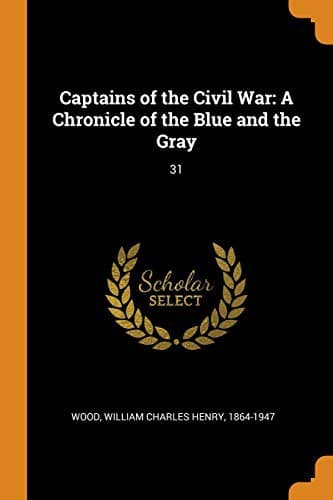
Captains of the Civil War: A Chronicle of the Blue and the GrayWood, William
History
Captains of the Civil War: A Chronicle of the Blue and the Gray
Wood, William
United States -- History -- Civil War, 1861-1865 -- Biography; United States -- History -- Civil War, 1861-1865 -- Campaigns
The three great motives which finally determined his momentous
course of action were: first, his aversion from taking any part
in coercing the home folks of Virginia; secondly, his belief in
State rights, tempered though it was by admiration for the Union;
and thirdly, his clear perception that war was now inevitable, and
that defeat for the South would inevitably mean a violent change
of all the ways of Southern life, above all, a change imposed by
force from outside, instead of the gradual change he wished to
see effected from within. He was opposed to slavery; and both his
own and his wife's slaves had long been free. Like his famous
lieutenant, Stonewall Jackson, he was particularly kind to the
blacks; none of whom ever wanted to leave, once they had been domiciled
at Arlington, the estate that came to him through his wife, Mary
Custis, great-granddaughter of Martha Washington. But, like Lincoln
before the war, he wished emancipation to come from the slave States
themselves, as in time it must have come, with due regard for
compensation.
On the twenty-third of this eventful April Lee was given the chief
command of all Virginia's forces. Three days later "Joe" Johnston
took command of the Virginians at Richmond. One day later again
"Stonewall" Jackson took command at Harper's Ferry. Johnston played
a great and noble part throughout the war; and we shall meet him
again and again, down to the very end. But Jackson claims our first
attention here.
Like all the great leaders on both sides Jackson had been an officer
of regulars. He was, however, in many ways unlike the army type.
He disliked society amusements, was awkward, shy, reserved, and
apparently recluse. Moderately tall, with large hands and feet,
stiff in his movements, ungainly in the saddle, he was a mere nobody
in public estimation when the war broke out. A few brother-officers
had seen his consummate skill and bravery as a subaltern in Mexico;
and still fewer close acquaintances had seen his sterling qualities
at Lexington, where, for ten years, he had been a professor at
the Virginia Military Institute. But these few were the only ones
who were not surprised when this recluse of peace suddenly became
a very thunderbolt of war--Puritan in soul, Cavalier in daring:
a Cromwell come to life again.
Public-domain text, read in full here on John Shaqi.
Reviews
Reviews
No reviews yet
Be the first to share your thoughts on this work.
Join the Discussion
Join the discussion
Sign in to leave a comment or review.
Sign InorCreate an account