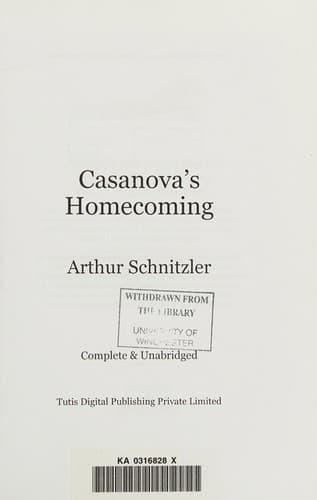
Adventure stories; Biographical fiction; Casanova, Giacomo, 1725-1798 -- Fiction; Europe -- Fiction; Sex customs -- Fiction
Marcolina, ignoring the personal animus in Casanova’s words, sat looking
skyward over the tree-crests, and tranquilly rejoined: “Ofttimes, and
especially on a day like this”--to Casanova, knowing what he knew, the
words conveyed the thrill of reverence in the newly awakened heart of a
woman--“I feel as if all that people speak of as philosophy and religion
were no more than playing with words. A sport nobler perhaps than
others, nevertheless more unmeaning than them all. Infinity and eternity
will never be within the grasp of our understanding. Our path leads from
birth to death. What else is left for us than to live a life accordant
with the law that each of us bears within--or a life of rebellion
against that law? For rebellion and submissiveness both issue from God.”
Olivo looked at his niece with timid admiration, then turned to
contemplate Casanova with some anxiety. Casanova was in search of a
rejoinder which should convince Marcolina that she was in one breath
affirming and denying God, or should prove to her that she was
proclaiming God and the Devil to be the same. He realized, however, that
he had nothing but empty words to set against her feelings, and to-day
words did not come to him readily. His expression showed him to be
somewhat at a loss, and apparently reminded Amalia of the confused
menaces he had uttered on the previous day. So she hastened to remark:
“Marcolina is deeply religious all the same, I can assure you,
Chevalier.”
Marcolina smiled.
“We are all religious in our several ways,” said Casanova civilly.
Now came a turn in the road, and the nunnery was in sight. The slender
tops of cypresses showed above the encircling wall. At the sound of the
approaching carriage, the great doors had swung open. The porter, an old
man with a flowing white beard, bowed gravely and gave them admittance.
Through the cloisters, between the columns of which they caught glimpses
of an overgrown garden, they advanced towards the main building, from
whose unadorned, grey, and prison-like exterior an unpleasantly cool
air was wafted. Olivo pulled the bellrope; the answering sound was
high-pitched, and died away in a moment. A veiled nun silently appeared,
and ushered the guests into the spacious parlor. It contained merely
a few plain wooden chairs, and the back was cut off by a heavy iron
grating, beyond which nothing could be seen but a vague darkness.
Public-domain text, read in full here on John Shaqi.
Reviews
Reviews
No reviews yet
Be the first to share your thoughts on this work.
Join the Discussion
Join the discussion
Sign in to leave a comment or review.
Sign InorCreate an account