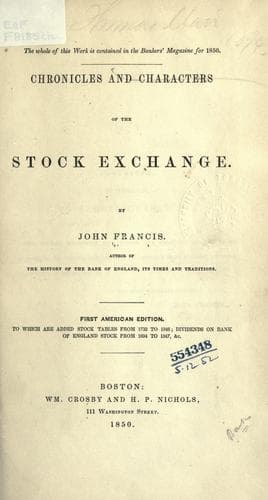
Chronicles and characters of the stock exchangeFrancis, John, of the Bank of England
History
Chronicles and characters of the stock exchange
Francis, John, of the Bank of England
Speculation; Stock Exchange (London, England)
having appealed to the propensities of the
people, and raised one million by the sale of lottery-tickets, the
prizes of which were funded at four per cent. for sixteen years. The
voice of the moralist continued to be raised; and the public papers
show, that, directly the state sanctioned the nuisance, the evil
increased tenfold, and that schemes were introduced which were a loss
to all save the promoters. “What a run of lotteries we have had!”
says one. “With what haste they all put in their money! What golden
promises they made!”
The anecdotes connected with these abominations, the grim, grotesque
despair of the losers, and the eager delight of the gainers, was for
the time the great entertainment of the town. Men ran with eager
haste after the lotteries of merchandise; and “the people were
tickled,” says a pamphleteer, “with the proposals of prodigious
profits, when the proposers intended it only for themselves.” The
writer concludes somewhat vehemently:—“Indeed, the people have been
so damnably cheated, they have no need of dissuading, and their own
sufferings are sufficient to convince them it is their interest to
forbear.”
The system of lotteries sanctioned and employed by the legislature
was a terrible temptation to human nature. The chance, however
remote, of gaining a large sum by a small risk, with the feeling
of anxious and not unpleasing excitement, rendered lotteries a
favorite phase of English gambling; for the voice of the people had
not spoken so peremptorily the great truth, that the state must
not purchase a nation’s wealth at the price of a nation’s morals.
That which a government employs as an instrument of wealth, is
sure to be followed by the people to a lower extent, but in a more
mischievous manner. In 1772, lottery magazine proprietors, lottery
tailors, lottery stay-makers, lottery glovers, lottery hat-makers,
lottery tea merchants, lottery snuff-and-tobacco merchants, lottery
barbers,—where a man, for being shaved and paying threepence,
stood a chance of receiving £10,—lottery shoe-blacks, lottery
eating-houses,—where, for sixpence, a plate of meat and the chance
of sixty guineas was given,—lottery oyster-stalls,—where threepence
gave a supply of oysters and a remote chance of five guineas,—were
plentiful; and, to complete a catalogue which speaks volumes, at
a sausage-stall in a narrow alley was the important intimation
written up, that for one farthing’s worth of sausages, the fortunate
purchaser might realize a capital of five shillings. Quack doctors—a
class which formed so peculiar a feature in village life of old—sold
medicine at a high price, giving those who purchased it tickets in a
lottery purporting to contain silver and other valuable prizes.
Public-domain text, read in full here on John Shaqi.
Reviews
Reviews
No reviews yet
Be the first to share your thoughts on this work.
Elsewhere in the archive
Join the Discussion
Join the discussion
Sign in to leave a comment or review.
Sign InorCreate an account