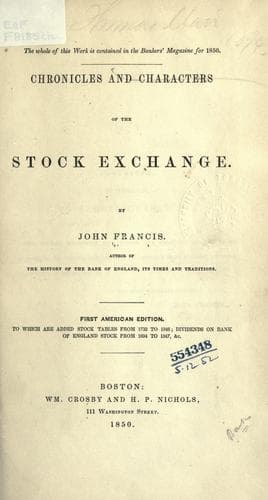
Chronicles and characters of the stock exchangeFrancis, John, of the Bank of England
History
Chronicles and characters of the stock exchange
Francis, John, of the Bank of England
Speculation; Stock Exchange (London, England)
It has lately been the custom to speak with contempt of joint-stock
associations, although it is to such bodies that England is indebted
for her greatest and her grandest undertakings. The Bank of England,
which has been called the bank of the world,—the railways, which bear
comfort and civilization to the remotest hamlets,—the canals, which
convey our commerce and irrigate our lands,—our docks, which contain
the wealth of the East and of the West,—our life-assurance companies,
which comfort many a desolate hearth and home,—are the result of
joint-stock companies. The evil is passing; but the good is permanent.
A similar outcry is always raised against projectors and speculators.
Swift employed his pen in ridiculing them; Scott introduced one
to turn him into contempt; Addison employed his fine genius in
satirizing them; Steele wrote one of his best essays on them. The
smaller herd of wits have swelled the cry; and they to whom mankind
are preëminently indebted are named with contempt, and treated with
derision. The projectors of all great works have been disdainfully
regarded at one period or another. The men who first planned our
bridges have been neglected; the promoters of railways, which are
now paying well, and rejoicing our rural homesteads with the polish
and the luxury of cities, were a by-word to the mass. And yet the
finest minds of the day are employed in projecting. The discoverer
of steam-power was a projector; Arkwright was only a projector;
Thomas Gray was the same. What does not England owe to men who bore
the burden and the heat of the day in the introduction of projects,
which, once household luxuries, they have made household necessities!
The cottage of the poor is comforted, the mansion of the rich is
gladdened, with works for which projectors were ridiculed and
speculators ruined. We cannot cast our eyes around without these
works meeting our view. They add a grace to our persons, they cheapen
our luxuries, they adorn our homes.
The mere man of routine thinks it a sacred duty to laugh at those of
whose services he is glad to avail himself; while the banker, the
merchant, and the moneyed tradesman first treat him as an intruder,
and then buy shares in the discovery they disdainfully rejected.
The world is rich in the names of those who have benefited and been
neglected by their fellow-men.
Public-domain text, read in full here on John Shaqi.
Reviews
Reviews
No reviews yet
Be the first to share your thoughts on this work.
Elsewhere in the archive