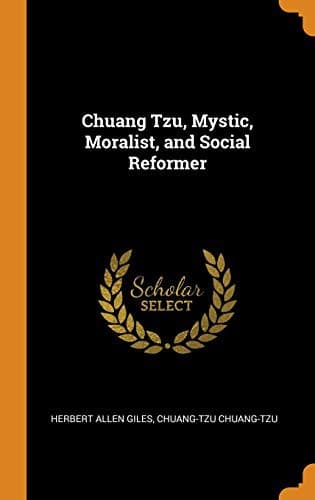
Chuang Tzu: Mystic, Moralist, and Social ReformerZhuangzi
Religion
Chuang Tzu: Mystic, Moralist, and Social Reformer
Zhuangzi
Ethics -- China; Philosophy, Chinese
"On the other hand, if the Prince loves the good and hates the bad,
what object will you have in inviting him to change his ways? Before
you have opened your mouth to preach, the Prince himself will have
seized the opportunity to wrest the victory from you. Your eye will
fall, your expression fade, your words will stick, your face will
change, and your heart will die within you. It will be as though you
took fire to quell fire, water to quell water, which is popularly known
as 'pouring oil on the flames.' And if you begin with concessions,
there will be no end to them. Neglect this sound advice, and you will
be the victim of that violent man.
"Of old, Chieh murdered Kuan Lung Fêng, and Chou slew Prince Pi Kan.
Their victims were both men who cultivated virtue themselves in
order to secure the welfare of the people. But in doing this they
offended their superiors; and therefore, because of that very moral
culture, their superiors got rid of them, in order to guard their own
reputations.
Chieh and Chou are the two typical tyrants of Chinese history.
"Of old, Yao attacked the Ts'ung-chih and Hsü-ao countries, and Yü
attacked the Yu-hu country. Homes were desolated and families destroyed
by the slaughter of the inhabitants. Yet they fought without ceasing,
and strove for victory to the last. These are instances known to all.
Now if the Sages of old failed in their efforts against this love of
fame, this desire for victory,--are you likely to succeed? But of
course you have a scheme. Tell it to me."
"Gravity of demeanour," replied Yen Hui, "and dispassionateness; energy
and singleness of purpose,--will this do?"
"Alas!" said Confucius, "that will not do. If you make a show of being
perfect and obtrude yourself, the Prince's mood will be doubtful.
Ordinarily, he is not opposed, and so he has come to take actual
pleasure in trampling upon the feelings of others. And if he has thus
failed in the practice of routine virtues, do you expect that he will
take readily to higher ones? You may insist, but without result.
Outwardly you will be right, but inwardly wrong. How then will you make
him mend his ways?"
"Just so," replied Yen Hui. "I am inwardly straight, and outwardly
crooked, completed after the models of antiquity.
"He who is inwardly straight is a servant of God. And he who is a
servant of God knows that the Son of Heaven
The Emperor.
and himself are equally the children of God. Shall then such a one
trouble whether man visits him with evil or with good? Man indeed
regards him as a child; and this is to be a servant of God.
(1) Children are everywhere exempt.--This is the first limb of a
threefold argument.
"He who is outwardly crooked is a servant of man. He bows, he kneels,
he folds his hands;--such is the ceremonial of a minister. What all men
do, shall I dare not to do? What all men do, none will blame me for
doing. This is to be a servant of man.
(2) The individual is not punished for the faults of the community.
Public-domain text, read in full here on John Shaqi.
Reviews
Reviews
No reviews yet
Be the first to share your thoughts on this work.
Join the Discussion
Join the discussion
Sign in to leave a comment or review.
Sign InorCreate an account