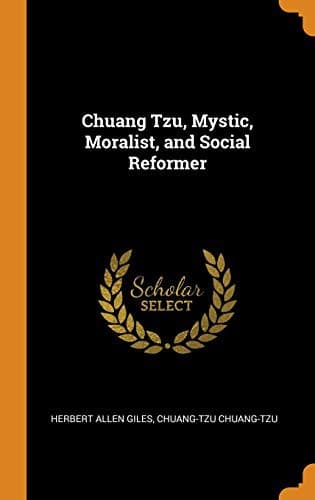
Chuang Tzu: Mystic, Moralist, and Social ReformerZhuangzi
Religion
Chuang Tzu: Mystic, Moralist, and Social Reformer
Zhuangzi
Ethics -- China; Philosophy, Chinese
The soul, according to Chuang Tzŭ, if duly nourished and not allowed
to wear itself out with the body in the pursuits of mortality, may
become immortal and return beatified to the Great Unknown whence it
came.
CHAPTER IV.
MAN AMONG MEN.
_Argument_:--Man must fall in with his mortal environment--His virtue
should be passive, not active--He should be rather than do--Talents a
hindrance--But of petty uselessness great usefulness is achieved.
Yen Hui went to take leave of Confucius.
A disciple of the Sage. Also known as Tzŭ Yüan.
"Whither are you bound?" asked the Master.
"I am going to the State of Wei," was the reply.
"And what do you propose to do there?" continued Confucius.
"I hear," answered Yen Hui, "that the Prince of Wei is of mature age,
but of an unmanageable disposition. He behaves as if the State were of
no account, and will not see his own faults. Consequently, the people
perish; and their corpses lie about like so much undergrowth in a
marsh. They are at extremities. And I have heard you, Sir, say that if
a State is well governed it may be neglected; but that if it is badly
governed, then we should visit it.
In the _Lun Yü_, Confucius says exactly the opposite of this.
The science of medicine embraces many various diseases. I would test
my knowledge in this sense, that perchance I may do some good to that
State."
"Alas!" cried Confucius, "you will only succeed in bringing evil upon
yourself. For TAO must not be distributed. If it is, it will lose its
unity. If it loses its unity, it will be uncertain; and so cause mental
disturbance,--from which there is no escape.
"The sages of old first got TAO for themselves, and then got it for
others. Before you possess this yourself, what leisure have you to
attend to the doings of wicked men? Besides, do you know what Virtue
results in and where Wisdom ends? Virtue results in a desire for
fame; Wisdom ends in contentions. In the struggle for fame men crush
each other, while their wisdom but provokes rivalry. Both are baleful
instruments, and may not be incautiously used.
"Besides, those who, before influencing by their own solid virtue and
unimpeachable sincerity, and before reaching the heart by the example
of their own disregard for name and fame, go and preach charity and
duty to one's neighbour to wicked men,--only make these men hate them
for their very goodness' sake. Such persons are called _evil speakers_.
And those who speak evil of others are apt to be evil spoken of
themselves. That, alas! will be your end.
Public-domain text, read in full here on John Shaqi.
Reviews
Reviews
No reviews yet
Be the first to share your thoughts on this work.
Join the Discussion
Join the discussion
Sign in to leave a comment or review.
Sign InorCreate an account