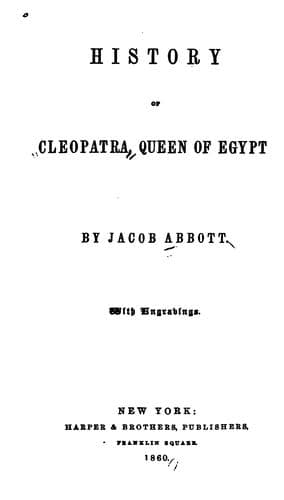
Cleopatra, Queen of Egypt, -30 B.C.; Egypt -- History -- 332-30 B.C. -- Biography; Queens -- Egypt -- Biography
The most easterly of the channels by which the waters of the river find
their way through the Delta to the sea, is called, as it will be seen
marked upon the map, the Pelusiac branch. It forms almost the boundary
of the fertile region of the Delta on the eastern side. There was an
ancient city named Pelusium near the mouth of it. This was, of course,
the first Egyptian city reached by those who arrived by land from the
eastward, traveling along the shores of the Mediterranean Sea. On
account of its thus marking the eastern frontier of the country, it
became a point of great importance, and is often mentioned in the
histories of ancient times.
The westernmost mouth of the Nile, on the other hand, was called the
Canopic mouth. The distance along the coast from the Canopic mouth to
Pelusium was about a hundred miles. The outline of the coast was
formerly, as it still continues to be, very irregular, and the water
shallow. Extended banks of sand protruded into the sea, and the sea
itself, as if in retaliation, formed innumerable creeks, and inlets, and
lagoons in the land. Along this irregular and uncertain boundary the
waters of the Nile and the surges of the Mediterranean kept up an
eternal war, with energies so nearly equal, that now, after the lapse of
eighteen hundred years since the state of the contest began to be
recorded, neither side has been found to have gained any perceptible
advantage over the other. The river brings the sands down, and the sea
drives them incessantly back, keeping the whole line of the shore in
such a condition as to make it extremely dangerous and difficult of
access to man.
It will be obvious, from this description of the valley of the Nile,
that it formed a country which was in ancient times isolated and
secluded, in a very striking manner, from all the rest of the world. It
was wholly shut in by deserts, on every side, by land; and the shoals,
and sand-bars, and other dangers of navigation which marked the line of
the coast, seemed to forbid approach by sea. Here it remained for many
ages, under the rule of its own native ancient kings. Its population was
peaceful and industrious. Its scholars were famed throughout the world
for their learning, their science, and their philosophy.
Public-domain text, read in full here on John Shaqi.
Reviews
Reviews
No reviews yet
Be the first to share your thoughts on this work.
Join the Discussion
Join the discussion
Sign in to leave a comment or review.
Sign InorCreate an account