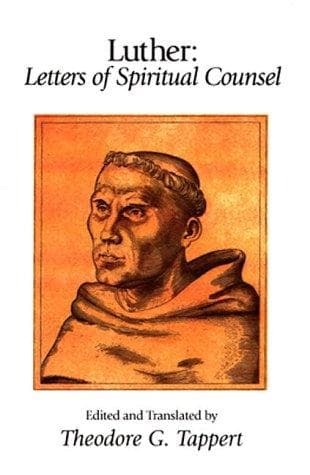
Commentary on Genesis, Vol. 1: Luther on the CreationLuther, Martin
ReligionChristian
Commentary on Genesis, Vol. 1: Luther on the Creation
Luther, Martin
Bible. Genesis -- Commentaries
In this passage frugality of living is commended to us. For we are
here taught that our first parents, being thus righteously deprived of
all other kinds of food, had nothing left for food but the herb of the
field. These facts therefore ought to lead us not only to frugality,
but also to patience; whenever we see others abounding in delicacies
and dainties of every kind, while we ourselves have nothing but bread,
salt and water. For our thoughts ought to be these: this is the
punishment justly inflicted on Adam. When he might have enjoyed, by
the will, and command, and gift of God, the delicious fruits of every
kind which grew in paradise; he was compelled with all his posterity
to live on the common pot herbs, because of his disobedience.
V. 19a. _In the sweat of thy face shalt thou eat bread._
With what variety of expression and repetition does Moses dwell on
this labor and trouble, when he is declaring the manner in which the
husband must labor and toil in feeding his family, defending his
property and governing his house! And all these toils and troubles are
far more difficult in our age on account of the perverseness of men,
than they were "in the beginning." For we universally witness, even
where the expectation of food is certain, with what difficulty a
family are kept to their duty. Nor was Adam himself without his
experience of this great evil. For even while he was ruling his family
with all possible holiness, he witnessed murder committed by his son
Cain. I say nothing now about all other sorrows which a long life
compels a man to see and bear in his posterity. This anxiety and toil
therefore await the husband. He must endure this labor, which is
neither pleasant nor successful. Nor ought any one to be found who
does not endure this sweat. Hence, much more perilous is the life of
the Papists; all of whom abuse their wealth, obtained by the labor of
others, to their own gratifications and indolence.
But here a question has been raised, whether all men ought not to be
husbandmen, or at least whether they ought not to devote themselves to
manual labor? Some did indeed thus foolishly contend at the beginning
of the Gospel among us. For they so abused this and other like
passages of Scripture, which command the labor of the hands, that the
youth throwing aside their literary studies gave themselves up to
manual employments; and Carlstadt, the leader of these misguided ones,
leaving his proper station in life, purchased a farm, and dug and
cultivated his own land. For myself indeed if I could with a good
conscience forsake my calling as a minister of the Word, it would be
far more easy and pleasant employment for me to be employed in
cultivating my garden, digging with my spade and breaking the clods
with my shovel, than to endure this hard labor, which I now undergo.
For the toil of country laborers bears no proportion whatever to this
our ministerial "sweat."
Public-domain text, read in full here on John Shaqi.
Reviews
Reviews
No reviews yet
Be the first to share your thoughts on this work.
Elsewhere in the archive
Join the Discussion
Join the discussion
Sign in to leave a comment or review.
Sign InorCreate an account