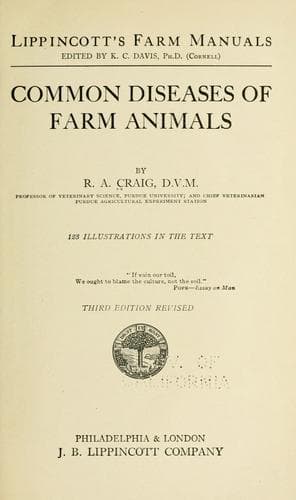
Common Diseases of Farm AnimalsCraig, Robert Alexander
Science
Common Diseases of Farm Animals
Craig, Robert Alexander
Veterinary medicine
The organs that form the digestive tract are the mouth, pharynx,
oesophagus, stomach, intestines and the annexed glands, viz.: the salivary,
liver, and pancreas. The development of these organs differs in the
different species of animals. For example, solipeds possess a small, simple
stomach and capacious, complicated intestines. Just the opposite is true of
ruminants. The different species of ruminants possess a large, complicated
stomach, and comparatively simple intestines. In swine we meet with a more
highly developed stomach than that of solipeds and a more simple intestinal
tract. Of all domestic animals the most simple digestive tract occurs in
the dog. These variations in the development of the different organs of
digestion, together with the difference in the character of the feed and
method of feeding, cause a variation in the kind of diseases met with in
the different species. The complicated stomach of ruminants predispose them
to diseases of this portion of the digestive tract. Because of their
complicated intestinal tract solipeds are prone to intestinal disease.
DISEASES OF THE MOUTH
GENERAL DISCUSSION.--The mouth is the first division of the digestive
tract. It is formed by the lips, cheeks, palate, soft palate, tongue and
teeth. Here the feed is acted on mechanically. It is broken up by the teeth
and moved about until mixed with the saliva and put into condition to pass
through the pharynx and along the oesophagus to the stomach. The mechanical
change that the feed is subject to is very imperfect in dogs. In the horse
it is a slow, thorough process, although greedy feeders are not uncommon.
The first mastication in the ox is three times quicker than in horses, but
the process of rumination is slow and thorough.
STOMATITIS.--Simple inflammation of the mouth is frequently met with in
horses. Ulcerative or infectious inflammation commonly occurs in young, and
occasionally in old, debilitated animals. This form of sore mouth will be
discussed along with other infectious diseases, and the following
discussion will be confined to the non-infectious form of the disease.
_The causes_ are irritation from the bit, sharp teeth, irritating drenches,
roughage that contains beards or awns of grasses and grains, and burrs that
wound the lining membrane of the mouth. Febrile, or digestive disorders, or
any condition that may interfere with feeding, may cause this disorder. In
the latter cases the mucous membrane of the mouth is not cleansed by the
saliva. Particles of feed may decompose and irritating organisms set up an
inflammation. Putrid or decomposed slops, hot feeds, irritating drenches
and drinking from filthy wallows are common causes of inflammation of the
mouth in hogs.
Public-domain text, read in full here on John Shaqi.
Reviews
Reviews
No reviews yet
Be the first to share your thoughts on this work.
Join the Discussion
Join the discussion
Sign in to leave a comment or review.
Sign InorCreate an account