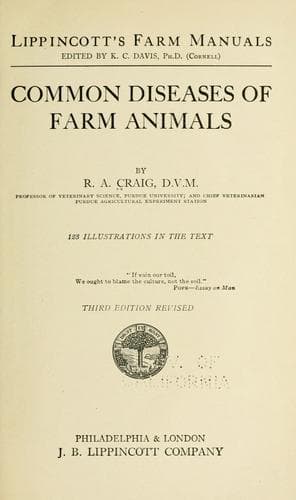
Common Diseases of Farm AnimalsCraig, Robert Alexander
Science
Common Diseases of Farm Animals
Craig, Robert Alexander
Veterinary medicine
_The symptoms_ vary in the different cases and species. Slight or localized
inflammation of the mouth is usually overlooked by the attendant. Lampas of
horses may be considered a local inflammation involving the palate.
Lacerations of the cheek or tongue by the teeth, or irritating feed,
usually result in a slight interference with prehension and mastication and
more or less salivation. Salivation from this cause should not be confused
with salivation resulting from feeding on white clover.
In generalized inflammation of the mucous membrane, the first symptom
usually noticed is the inability to eat. On examining the mouth we find the
mucous membrane inflamed, hot and dry. A part may appear coated. In a short
time the odor from the mouth is fetid. Following this dry stage of the
inflammation is the period of salivation. Saliva dribbles from the mouth,
and in severe cases it is mixed with white, stringy shreds of epithelium
and tinged with blood. In less acute forms of the disease, we may notice
little blisters or vesicles scattered over the lining membrane of the lips,
cheeks and tongue.
The acute form of stomatitis runs a short course, usually a few days, and
responds readily to treatment. Localized inflammation caused by irritation
from teeth, or feeding irritating feeds, does not respond so readily to
treatment.
_The treatment_ is largely preventive and consists largely in removing the
cause. When the mouth is inflamed, roughage should be fed rather sparingly,
and soft feeds such as slops, mashes, or gruels given in place of the
regular diet. Plenty of clean drinking water should be provided. In the way
of medicinal treatment antiseptic and astringent washes are indicated. A
four per cent water solution of boric acid may be used, or a one-half per
cent water solution of a high grade coal-tar disinfectant. The mouth should
be thoroughly irrigated twice daily until the mucous surfaces appear
normal.
DEPRAVED APPETITE
A depraved appetite is met with in all species of farm animals, but it is
especially common in ruminants. It should not be classed as a disease, but
more correctly as a bad habit, or symptom of innutrition or indigestion.
The animals affected seem to have an irresistible desire to lick, chew and
swallow indigestible and disgusting objects.
_The common cause_ of depraved appetite is the feeding of a ration
deficient in certain food elements. A ration deficient in protein or in
salts is said to cause this disorder. Lack of exercise, or confinement,
innutrition, and a depraved sense of taste may favor the development of
this disease. For example, when sheep are housed closely they may contract
the habit of chewing one another's fleeces. Lambs are especially apt to
contract this habit when suckling ewes that have on their udders long wool
soiled with urine and faeces.
Public-domain text, read in full here on John Shaqi.
Reviews
Reviews
No reviews yet
Be the first to share your thoughts on this work.
Join the Discussion
Join the discussion
Sign in to leave a comment or review.
Sign InorCreate an account