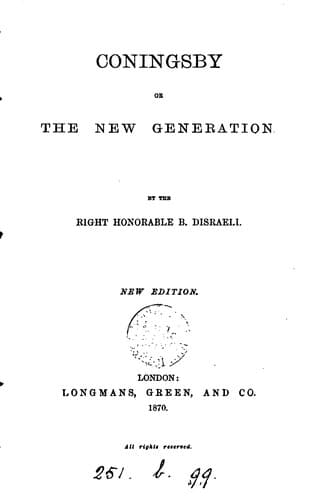
Coningsby; Or, The New GenerationDisraeli, Benjamin, Earl of Beaconsfield
General
Coningsby; Or, The New Generation
Disraeli, Benjamin, Earl of Beaconsfield
Great Britain -- Fiction; Political fiction; Politicians -- Fiction
It can scarcely be alleged that the public was altogether unprepared for
this catastrophe. Many deemed it inevitable; few thought it imminent.
The career of the Ministry, and the existence of the Parliament, had
indeed from the first been turbulent and fitful. It was known, from
authority, that there were dissensions in the cabinet, while a House
of Commons which passed votes on subjects not less important than
the repeal of a tax, or the impeachment of a judge, on one night, and
rescinded its resolutions on the following, certainly established
no increased claims to the confidence of its constituents in its
discretion. Nevertheless, there existed at this period a prevalent
conviction that the Whig party, by a great stroke of state, similar in
magnitude and effect to that which in the preceding century had changed
the dynasty, had secured to themselves the government of this country
for, at least, the lives of the present generation. And even the
well-informed in such matters were inclined to look upon the perplexing
circumstances to which we have alluded rather as symptoms of a want
of discipline in a new system of tactics, than as evidences of any
essential and deeply-rooted disorder.
The startling rapidity, however, of the strange incidents of 1834; the
indignant, soon to become vituperative, secession of a considerable
section of the cabinet, some of them esteemed too at that time among
its most efficient members; the piteous deprecation of ‘pressure from
without,’ from lips hitherto deemed too stately for entreaty, followed
by the Trades’ Union, thirty thousand strong, parading in procession
to Downing-street; the Irish negotiations of Lord Hatherton, strange
blending of complex intrigue and almost infantile ingenuousness; the
still inexplicable resignation of Lord Althorp, hurriedly followed by
his still more mysterious resumption of power, the only result of his
precipitate movements being the fall of Lord Grey himself, attended by
circumstances which even a friendly historian could scarcely describe
as honourable to his party or dignified to himself; latterly, the
extemporaneous address of King William to the Bishops; the vagrant
and grotesque apocalypse of the Lord Chancellor; and the fierce
recrimination and memorable defiance of the Edinburgh banquet, all these
impressive instances of public affairs and public conduct had
combined to create a predominant opinion that, whatever might be the
consequences, the prolonged continuance of the present party in power
was a clear impossibility.
Public-domain text, read in full here on John Shaqi.
Reviews
Reviews
No reviews yet
Be the first to share your thoughts on this work.
Join the Discussion
Join the discussion
Sign in to leave a comment or review.
Sign InorCreate an account