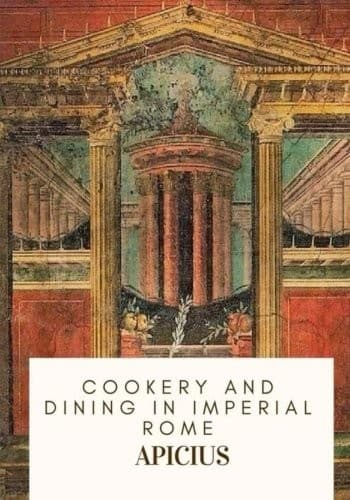
We must realize that Apicius is only a book, a frail hand-made record
and that, while the record itself might have been forgotten, its
principles have become international property, long ago. Thus they
live on. Like a living thing--a language, a custom, they themselves
may have undergone changes, "improvements," alterations, augmentation,
corruption. But the character has been preserved; a couple of thousand
years are, after all, but a paltry matter. Our own age is but the
grandchild of antiquity. The words we utter, in their roots, are those
of our grandfathers. And so do many dishes we eat today resemble those
once enjoyed by Apicius and his friends.
Is it necessary to point the tenacity of the spirit of the Antique,
reaching deep into the modern age? The latest Apicius edition in the
original Latin is dated 1922!
The gastronomic life of Europe was under the complete rule of old Rome
until the middle of the seventeenth century. Then came a sudden change
for modernity, comparable to the rather abrupt change of languages
from the fashionable Latin to the national idioms and vernacular, in
England and Germany under the influence of literary giants like
Luther, Chaucer, Shakespeare.
All medieval food literature of the continent and indeed the early
cookery books of England prior to La Varenne (Le Cuisinier François,
1654) are deeply influenced by Apicius. The great change in eating,
resulting in a new gastronomic order, attained its highest peak of
perfection just prior to the French revolution. Temporarily suspended
by this social upheaval, it continued to flourish until about the
latter part of last century. The last decades of this new order is
often referred to as the classical period of gastronomy, with France
claiming the laurels for its development. "Classic" for reasons we do
not know (Urbain Dubois, outstanding master of this period wrote "La
Cuisine classique") except that its precepts appeal as classical to
our notion of eating. This may not correspond to the views of
posterity, we had therefore better wait a century or two before
proclaiming our system of cookery "classical."
Disposing of that old "classic," Apicius, as slowly as a conservative
cooking world could afford to do, the present nations set out to
cultivate a taste for things that a Roman would have pronounced unfit
for a slave. Still, the world moves on. Conquest, discovery of foreign
parts, the New World, contributed fine things to the modern
table,--old forgotten foods were rediscovered--endless lists of
materials and combinations, new daring, preposterous dishes that made
the younger generation rejoice while old folks looked on gasping with
dismay, despair, contempt.
Public-domain text, read in full here on John Shaqi.
Reviews
Reviews
No reviews yet
Be the first to share your thoughts on this work.
Join the Discussion
Join the discussion
Sign in to leave a comment or review.
Sign InorCreate an account