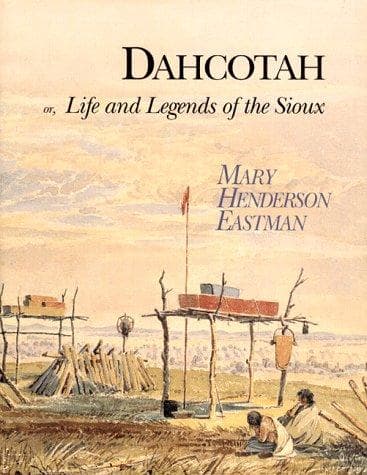
Dahcotah: Life and Legends of the Sioux Around Fort SnellingEastman, Mary H. (Mary Henderson)
History
Dahcotah: Life and Legends of the Sioux Around Fort Snelling
Eastman, Mary H. (Mary Henderson)
Dakota Indians -- Folklore; Dakota Indians -- History; Dakota Indians -- Social life and customs
But in a woman's heart God has placed sympathies to which the sorrows of
the Dahcotah women appeal. Listen! for they tell you they would fain
know of a balm for the many griefs they endure; they would be taught to
avoid the many sins they commit; and, oh! how gladly would many of them
have their young children accustomed to shudder at the sight of a fellow
creature's blood. Like us, they pour out the best affections of early
youth on a beloved object. Like us, they have clasped their children to
their hearts in devoted love. Like us, too, they have wept as they laid
them in the quiet earth.
But they must fiercely grapple with trials which we have never
conceived. Winter after winter passes, and they perish from disease, and
murder, and famine.
There is a way to relieve them--would you know it? Assist the
missionaries who are giving their lives to them and God. Send them
money, that they may clothe the feeble infant, and feed its
starving mother.
Send them money, that they may supply the wants of those who are sent to
school, and thus encourage others to attend.
As the day of these forgotten ones is passing away, so is ours. They
were born to suffer, we to relieve. Let their deathless souls be taught
the way of life, that they and we, after the harsh discords of earth
shall have ceased, may listen together to the "harmonies of Heaven."
HAOKAH OZAPE;
THE DANCE TO THE GIANT
CHAPTER I.
The dance to the Giant is now rarely celebrated among the Dahcotahs. So
severe is the sacrifice to this deity, that there are few who have
courage to attempt it; and yet Haokah is universally reverenced and
feared among the Sioux.
They believe in the existence of many Giants, but Haokah is one of the
principal. He is styled the anti-natural god. In summer he feels cold,
in winter he suffers from the heat; hot water is cold to him, and
the contrary.
The Dahcotah warrior, however brave he may be, believes that when he
dreams of Haokah, calamity is impending and can only be avoided by some
sort of sacrifice to this god.
The incident on which this story is founded, occurred while I resided
among the Sioux. I allude to the desertion of Wenona by her lover. It
serves to show the blind and ignorant devotion of the Dahcotah to
his religion.
And as man is ever alike in every country, and under every circumstance
of life--as he often from selfish motives tramples upon the heart that
trusts him--so does woman utterly condemn a sister, feeling no sympathy
for her sorrow, but only hatred of her fault.
Jealous for the honor of the long-reverenced feasts of the
Dahcotahs--the "Deer Killer" thought not for a moment of the sorrow and
disgrace he would bring upon Wenona, while Wauska loved the warrior more
than ever, triumphing in his preference of her, above her companion.
And Wenona--
A cloud came o'er the prospect of her life,
And evening did set in
Early, and dark and deadly.
Public-domain text, read in full here on John Shaqi.
Reviews
Reviews
No reviews yet
Be the first to share your thoughts on this work.
Elsewhere in the archive
Join the Discussion
Join the discussion
Sign in to leave a comment or review.
Sign InorCreate an account