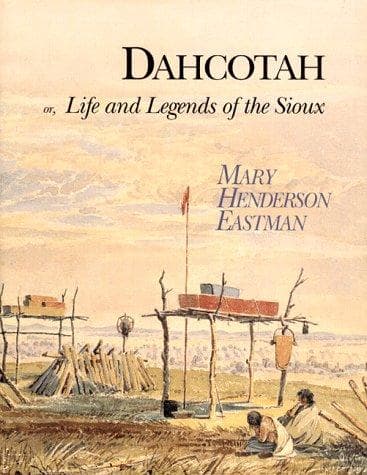
Dahcotah: Life and Legends of the Sioux Around Fort SnellingEastman, Mary H. (Mary Henderson)
History
Dahcotah: Life and Legends of the Sioux Around Fort Snelling
Eastman, Mary H. (Mary Henderson)
Dakota Indians -- Folklore; Dakota Indians -- History; Dakota Indians -- Social life and customs
A prominent ground of the slight regard in which the English hold
American literature, or at least one of the most plausible reasons given
for it, is our want of originality, particularly in point of subject
matter. It is said that our imitativeness is so servile, that for the
sake of following English models, at an immeasurable distance, we
neglect the new and grand material which lies all around us, in the
sublime features of our country, in our new and striking circumstances,
in our peculiar history and splendid prospects, and, above all, in the
character, superstitions, and legends of our aborigines, who, to eyes
across the water, look like poetical beings. We are continually
reproached by British writers for the obtuse carelessness with which we
are allowing these people, with so much of the heroic element in their
lives, and so much of the mysterious in their origin, to go into the
annihilation which seems their inevitable fate as civilization advances,
without an effort to secure and record all that they are able to
communicate respecting themselves.
And the reproach is just. In our hurry of utilitarian progress, we have
either forgotten the Indian altogether, or looked upon him only in a
business point of view, as we do almost everything else; as a
thriftless, treacherous, drunken fellow, who knows just enough to be
troublesome, and who must be cajoled or forced into leaving his
hunting-grounds for the occupation of very orderly and virtuous white
people, who sell him gunpowder and whiskey, but send him now and then a
missionary to teach him that it is wrong to get drunk and murder his
neighbor. To look upon the Indian with much regard, even in the light of
literary material, would be inconvenient; for the moment we recognize in
him a mind, a heart, a soul,--the recollection of the position in which
we stand towards him becomes thorny, and we begin dimly to remember
certain duties belonging to our Christian profession, which we have
sadly neglected with regard to the sons of the forest, whom we have
driven before us just as fast as we have required or desired their
lands. A few efforts have been made, not only to bring the poetry of
their history into notice, but to do them substantial good; the public
heart, however, has never responded to the feelings of those who, from
living in contact with the Indians, have felt this interest in them. To
most Americans, the red man is, to this day, just what he was to the
first settlers of the country--a being with soul enough to be blameable
for doing wrong, but not enough to claim Christian brotherhood, or to
make it _very_ sinful to shoot him like a dog, upon the slightest
provocation or alarm. While this feeling continues, we shall not look
to him for poetry; and the only imaginative writing in which he is
likely to be generally used as material, will be kindred to that known
by the appropriate title of "Pirate Literature." Mr. Cooper and Miss
Public-domain text, read in full here on John Shaqi.
Reviews
Reviews
No reviews yet
Be the first to share your thoughts on this work.
Join the Discussion
Join the discussion
Sign in to leave a comment or review.
Sign InorCreate an account