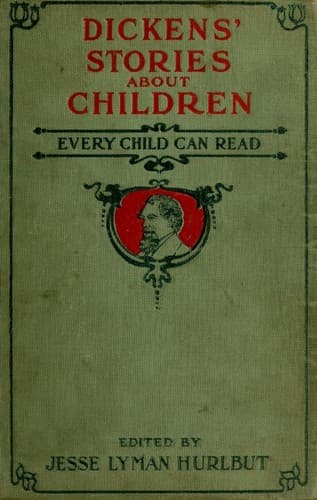
Dickens' Stories About Children Every Child Can ReadDickens, Charles
General
Dickens' Stories About Children Every Child Can Read
Dickens, Charles
Children -- Juvenile fiction; Children's stories, English
In course of time, the Father of the Marshalsea gradually developed a
new trait of character. He was very greatly ashamed of having his two
daughters work for their living; and tried to make it appear that they
were only doing work for pleasure, not for pay. But at the same time he
would take money from any one who would give it to him, without any
sense of shame. With the same hand that had pocketed a fellow-prisoner's
half-crown half an hour ago, he would wipe away the tears that streamed
over his cheeks if anything was spoken of his daughters' earning their
bread. So, over and above her other daily cares, the Child of the
Marshalsea had always upon her the care of keeping up the make-believe
that they were all idle beggars together.
The sister became a dancer. There was a ruined uncle in the family
group--ruined by his brother, the Father of the Marshalsea, and knowing
no more how, than his ruiner did, but taking the fact as something that
could not be helped. Naturally a retired and simple man, he had shown no
particular sense of being ruined, at the time when that calamity fell
upon him, further than he left off washing himself when the shock was
announced, and never took to washing his face and hands any more. He had
been a rather poor musician in his better days; and when he fell with
his brother, supported himself in a poor way by playing a clarionet as
dirty as himself in a small theatre band. It was the theatre in which
his niece became a dancer; he had been a fixture there a long time when
she took her poor station in it; and he accepted the task of serving as
her guardian, just as he would have accepted an illness, a legacy, a
feast, starvation--anything but soap.
To enable this girl to earn her few weekly shillings, it was necessary
for the Child of the Marshalsea to go through a careful form with her
father.
"Fanny is not going to live with us, just now, father. She will be here
a good deal in the day, but she is going to live outside with uncle."
"You surprise me. Why?"
"I think uncle wants a companion, father. He should be attended to and
looked after."
"A companion? He passes much of his time here. And you attend and look
after him, Amy, a great deal more than ever your sister will. You all go
out so much; you all go out so much."
This was to keep up the form and pretense of his having no idea that Amy
herself went out by the day to work.
"But we are always very glad to come home father; now, are we not? And
as to Fanny, perhaps besides keeping uncle company and taking care of
him, it may be as well for her not quite to live here always. She was
not born here as I was you know, father."
"Well, Amy, well. I don't quite follow you, but it's natural I suppose
that Fanny should prefer to be outside, and even that you often should,
too. So, you and Fanny and your uncle, my dear, shall have your own way.
Good, good. I'll not meddle; don't mind me."
Public-domain text, read in full here on John Shaqi.
Reviews
Reviews
No reviews yet
Be the first to share your thoughts on this work.
Join the Discussion
Join the discussion
Sign in to leave a comment or review.
Sign InorCreate an account