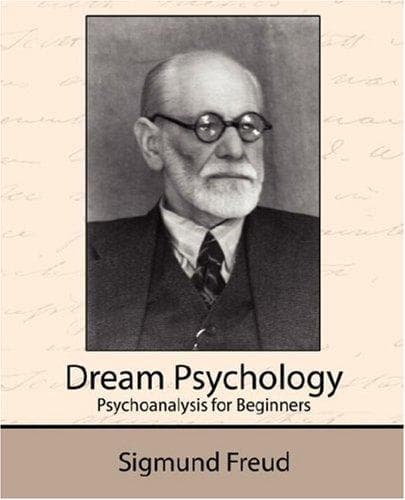
Dream Psychology: Psychoanalysis for BeginnersFreud, Sigmund
Science
Dream Psychology: Psychoanalysis for Beginners
Freud, Sigmund
Dreams; Psychoanalysis
This conception of repression once fixed, together with the distortion
of the dream in relation to repressed psychical matter, we are in a
position to give a general exposition of the principal results which the
analysis of dreams supplies. We learnt that the most intelligible and
meaningful dreams are unrealized desires; the desires they pictured as
realized are known to consciousness, have been held over from the
daytime, and are of absorbing interest. The analysis of obscure and
intricate dreams discloses something very similar; the dream scene again
pictures as realized some desire which regularly proceeds from the dream
ideas, but the picture is unrecognizable, and is only cleared up in the
analysis. The desire itself is either one repressed, foreign to
consciousness, or it is closely bound up with repressed ideas. The
formula for these dreams may be thus stated: _They are concealed
realizations of repressed desires_. It is interesting to note that they
are right who regard the dream as foretelling the future. Although the
future which the dream shows us is not that which will occur, but that
which we would like to occur. Folk psychology proceeds here according to
its wont; it believes what it wishes to believe.
Dreams can be divided into three classes according to their relation
towards the realization of desire. Firstly come those which exhibit a
_non-repressed, non-concealed desire_; these are dreams of the infantile
type, becoming ever rarer among adults. Secondly, dreams which express
in _veiled_ form some _repressed desire_; these constitute by far the
larger number of our dreams, and they require analysis for their
understanding. Thirdly, these dreams where repression exists, but
_without_ or with but slight concealment. These dreams are invariably
accompanied by a feeling of dread which brings the dream to an end. This
feeling of dread here replaces dream displacement; I regarded the dream
work as having prevented this in the dream of the second class. It is
not very difficult to prove that what is now present as intense dread in
the dream was once desire, and is now secondary to the repression.
There are also definite dreams with a painful content, without the
presence of any anxiety in the dream. These cannot be reckoned among
dreams of dread; they have, however, always been used to prove the
unimportance and the psychical futility of dreams. An analysis of such
an example will show that it belongs to our second class of dreams--a
_perfectly concealed_ realization of repressed desires. Analysis will
demonstrate at the same time how excellently adapted is the work of
displacement to the concealment of desires.
Public-domain text, read in full here on John Shaqi.
Reviews
Reviews
No reviews yet
Be the first to share your thoughts on this work.
Join the Discussion
Join the discussion
Sign in to leave a comment or review.
Sign InorCreate an account