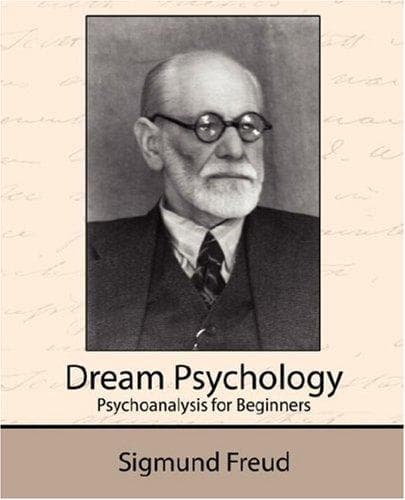
Dream Psychology: Psychoanalysis for BeginnersFreud, Sigmund
Science
Dream Psychology: Psychoanalysis for Beginners
Freud, Sigmund
Dreams; Psychoanalysis
The sleeping state or the psychical change to sleep, whatsoever it be,
is brought about by the child being sent to sleep or compelled thereto
by fatigue, only assisted by the removal of all stimuli which might open
other objects to the psychical apparatus. The means which serve to keep
external stimuli distant are known; but what are the means we can employ
to depress the internal psychical stimuli which frustrate sleep? Look at
a mother getting her child to sleep. The child is full of beseeching; he
wants another kiss; he wants to play yet awhile. His requirements are in
part met, in part drastically put off till the following day. Clearly
these desires and needs, which agitate him, are hindrances to sleep.
Every one knows the charming story of the bad boy (Baldwin Groller's)
who awoke at night bellowing out, "_I want the rhinoceros_." A really
good boy, instead of bellowing, would have _dreamt_ that he was playing
with the rhinoceros. Because the dream which realizes his desire is
believed during sleep, it removes the desire and makes sleep possible.
It cannot be denied that this belief accords with the dream image,
because it is arrayed in the psychical appearance of probability; the
child is without the capacity which it will acquire later to distinguish
hallucinations or phantasies from reality.
The adult has learnt this differentiation; he has also learnt the
futility of desire, and by continuous practice manages to postpone his
aspirations, until they can be granted in some roundabout method by a
change in the external world. For this reason it is rare for him to have
his wishes realized during sleep in the short psychical way. It is even
possible that this never happens, and that everything which appears to
us like a child's dream demands a much more elaborate explanation. Thus
it is that for adults--for every sane person without exception--a
differentiation of the psychical matter has been fashioned which the
child knew not. A psychical procedure has been reached which, informed
by the experience of life, exercises with jealous power a dominating and
restraining influence upon psychical emotions; by its relation to
consciousness, and by its spontaneous mobility, it is endowed with the
greatest means of psychical power. A portion of the infantile emotions
has been withheld from this procedure as useless to life, and all the
thoughts which flow from these are found in the state of repression.
Public-domain text, read in full here on John Shaqi.
Reviews
Reviews
No reviews yet
Be the first to share your thoughts on this work.
Join the Discussion
Join the discussion
Sign in to leave a comment or review.
Sign InorCreate an account