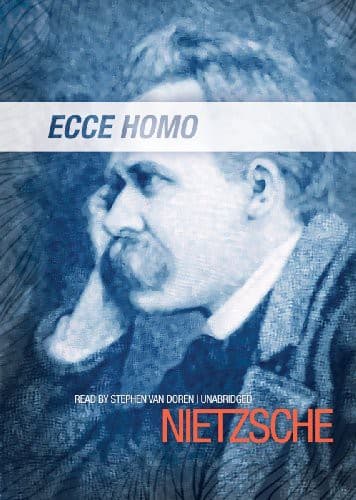
Ecce Homo: Complete Works, Volume SeventeenNietzsche, Friedrich Wilhelm
PhilosophyPhilosophy
Ecce Homo: Complete Works, Volume Seventeen
Nietzsche, Friedrich Wilhelm
Nietzsche, Friedrich Wilhelm, 1844-1900; Philosophers -- Germany -- Biography
man himself--conversely, in the case of that man whose nature is
fundamentally a rich one, resentment is a superfluous feeling, a
feeling to remain master of which is almost a proof of riches. Those
of my readers who know the earnestness-with which my philosophy wages
war against the feelings of revenge and rancour, even to the extent of
attacking the doctrine of "free will" (my conflict with Christianity
is only a particular instance of it), will understand why I wish to
focus attention upon my own personal attitude and the certainty of
my practical instincts precisely in this matter. In my moments of
decadence I forbade myself the indulgence of the above feelings,
because they were harmful; as soon as my life recovered enough riches
and pride, however, I regarded them again as forbidden, but this time
because they were _beneath_ me. That "Russian fatalism" of which I have
spoken manifested itself in me in such a way that for years I held
tenaciously to almost insufferable conditions, places, habitations,
and companions, once chance had placed them on my path--it was better
than changing them, than feeling that they could be changed, than
revolting against them.... He who stirred me from this fatalism, he
who violently tried to shake me into consciousness, seemed to me then
a mortal enemy--in point of fact, there was danger of death each time
this was done. To regard one's self as a destiny, not to wish one's
self "different"--this, in such circumstances, is sagacity, itself.
7
Public-domain text, read in full here on John Shaqi.
Reviews
Reviews
No reviews yet
Be the first to share your thoughts on this work.
Join the Discussion
Join the discussion
Sign in to leave a comment or review.
Sign InorCreate an account