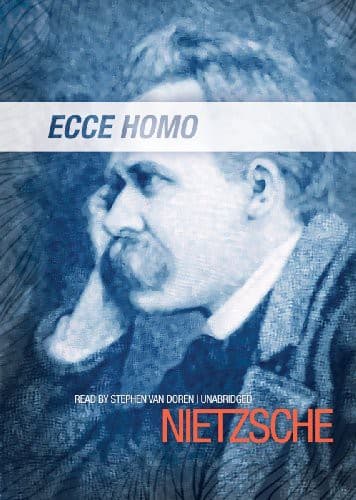
Ecce Homo: Complete Works, Volume SeventeenNietzsche, Friedrich Wilhelm
PhilosophyPhilosophy
Ecce Homo: Complete Works, Volume Seventeen
Nietzsche, Friedrich Wilhelm
Nietzsche, Friedrich Wilhelm, 1844-1900; Philosophers -- Germany -- Biography
With this book I open my campaign against morality. Not that it is at
all redolent of powder--you will find quite other and much nicer smells
in it, provided that you have any keenness in your nostrils. There
is nothing either of light or of heavy artillery in its composition,
and if its general end be a negative one, its means are not so--means
out of which the end follows like a logical conclusion, _not_ like a
cannon-shot. And if the reader takes leave of this book with a feeling
of timid caution in regard to everything which has hitherto been
honoured and even worshipped under the name of morality, it does not
alter the fact that there is not one negative word, not one attack,
and not one single piece of malice in the whole work--on the contrary,
it lies in the sunshine, smooth and happy, like a marine animal,
basking in the sun between two rocks. For, after all, I was this marine
animal: almost every sentence in the book was thought out, or rather
_caught,_ among that medley of rocks in the neighbourhood of Genoa,
where I lived quite alone, and exchanged secrets with the ocean. Even
to this day, when by chance I happen to turn over the leaves of this
book, almost every sentence seems to me like a hook by means of which I
draw something incomparable out of the depths; its whole skin quivers
with delicate shudders of recollection. This book is conspicuous for no
little art in gently catching things which whisk rapidly and silently
away, moments which I call godlike lizards--not with the cruelty of
that young Greek god who simply transfixed the poor little beast;
but nevertheless with something pointed--with a pen. "There are so
many dawns which have not yet shed their light"--this Indian maxim is
written over the doorway of this book. Where does its author seek that
new morning, that delicate red, as yet undiscovered, with which another
day--ah! a whole series of days, a whole world of new days!--will
begin? In the _Transvaluation of all Values,_ in an emancipation from
all moral values, in a saying of yea, and in an attitude of trust, to
all that which hitherto has been forbidden, despised, and damned. This
yea-saying book projects its light, its love, its tenderness, over all
evil things, it restores to them their soul, their clear conscience,
and their superior right and privilege to exist on earth. Morality is
not assailed, it simply ceases to be considered. This book closes with
the word "or?"--it is the only book which closes with an "or?".
2
Public-domain text, read in full here on John Shaqi.
Reviews
Reviews
No reviews yet
Be the first to share your thoughts on this work.
Join the Discussion
Join the discussion
Sign in to leave a comment or review.
Sign InorCreate an account