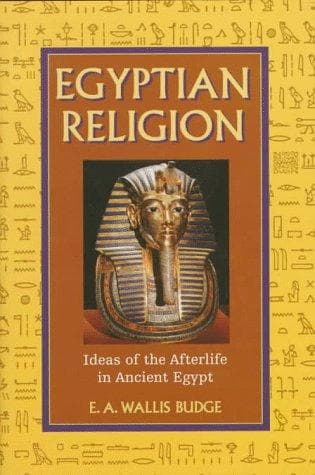
Egyptian Ideas of the Future LifeBudge, E. A. Wallis (Ernest Alfred Wallis), Sir
ReligionComparative
Egyptian Ideas of the Future Life
Budge, E. A. Wallis (Ernest Alfred Wallis), Sir
Egypt -- Religion; Eschatology, Egyptian; Future life
their priests what the Corinthians asked Saint Paul, "How are the dead
raised up? and with what body do they come?" But beyond doubt the belief
in the Resurrection was accepted by the dominant classes in Egypt. The
ceremonies which the Egyptians performed with the view of assisting the
deceased to pass the ordeal of the judgment, and to overcome his enemies
in the next world, will be described elsewhere, as also will be the form
in which the dead were raised up; we therefore return to the theological
history of Osiris.
The centre and home of the worship of Osiris in Egypt under the early
dynasties was Abydos, where the head of the god was said to be buried.
It spread north and south in the course of time, and several large
cities claimed to possess one or other of the limbs of his body. The
various episodes in the life of the god were made the subject of solemn
representations in the temple, and little by little the performance of
the obligatory and non-obligatory services in connection with them
occupied, in certain temples, the greater part of the time of the
priests. The original ideas concerning the god were forgotten and new
ones grew up; from being the _example_ of a man who had risen from the
dead and had attained unto life everlasting, he became the _cause_ of
the resurrection of the dead; and the power to bestow eternal life upon
mortals was transferred from the gods to him. The alleged dismemberment
of Osiris was forgotten in the fact that he dwelt in a perfect body in
the underworld, and that, whether dismembered or not, he had become
after his death the father of Horus by Isis. As early as the XIIth
dynasty, about B.C. 2500, the worship of this god had become almost
universal, and a thousand years later Osiris had become a sort of
national god. The attributes of the great cosmic gods were ascribed to
him, and he appeared to man not only as the god and judge of the dead,
but also as the creator of the world and of all things in it. He who was
the son of R[=a] became the equal of his father, and he took his place
side by side with him in heaven.
Public-domain text, read in full here on John Shaqi.
Reviews
Reviews
No reviews yet
Be the first to share your thoughts on this work.
Join the Discussion
Join the discussion
Sign in to leave a comment or review.
Sign InorCreate an account