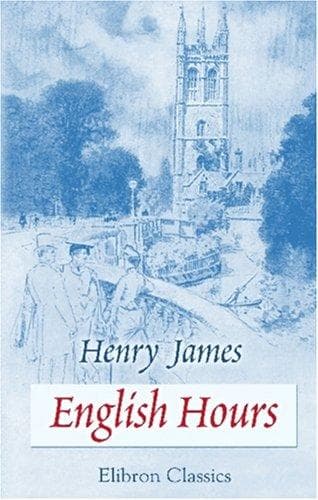
England -- Description and travel; James, Henry, 1843-1916 -- Travel -- England
this influence, for its part, has to suggest in respect to the book
itself.
Evidently, none the less, the setting, little as it has got itself
“rendered,” did somehow come into the painter’s ken; we know this,
moreover, independently, and we make out that he had his inner
mysteries and his reasons. The little house of Duval, faring forth from
the stress of the Alsatian fatherland, seeks safety and finds business
in the shrunken city, scarce at last more than a hamlet, of Edward the
First’s defeated design, where, in three generations, well on into the
century, it grinds and sleeps, smuggles and spends, according to the
fashions of the place and time. These communities appear to have had,
in their long decline, little industry but their clandestine traffic
with other coasts, in the course of which they quite mastered the art
of going, as we say, “one better” than the officers of the revenue. It
is to this hour a part of the small romance of Rye that you may fondly
fancy such scant opulence as rears its head to have had its roots in
the malpractice of forefathers not too rude for much cunning—in nightly
plots and snares and flurries, a hurrying, shuffling, hiding, that
might at any time have put a noose about most necks. Some of those
of the small gentry who were not smugglers were recorded highwaymen,
flourishing about in masks and with pistols; and indeed in the
general scene, as rendered by the supposed chronicler, these appear
the principal features. The only others are those of his personal and
private situation, which in fact, however, strikes me as best expressed
in the fact that the extremely talkative, discursive, ejaculatory,
and moralising Denis was possessed in perfection of his master’s
maturest style. He writes, almost to the life, the language of the
“Roundabout Papers;” so that if the third person had been exchanged,
throughout, for his first, and his occasional present tense been
superseded by the past, the rest of the text would have needed little
rearrangement. This imperfect unity was more or less inevitable—the
difficulty of projecting yourself as somebody else is never so great as
when you retain the _form_ of being yourself; but another of the many
reflections suggested by reperusal is as to whether the speaker is not
guilty of a slight abuse. Of course it may be said that what really has
happened was that Thackeray had, on his side, anticipated his hero in
the use of his hero’s natural idiom. It may thus have been less that
Denis had come to write highly “evolved” nineteenth-century English
than that his creator had arrived, in the “Roundabout Papers” and
elsewhere, at writing excellent reconstructed eighteenth. It would not,
however, were the enquiry to be pushed, be only on the autobiographer’s
personal and grammatical, but on his moral and sentimental accent,
as it were, that criticism would probably most bear. His manner of
thinking and feeling is quite as “Roundabout” as his manner of saying.
Public-domain text, read in full here on John Shaqi.
Reviews
Reviews
No reviews yet
Be the first to share your thoughts on this work.
Elsewhere in the archive
Join the Discussion
Join the discussion
Sign in to leave a comment or review.
Sign InorCreate an account