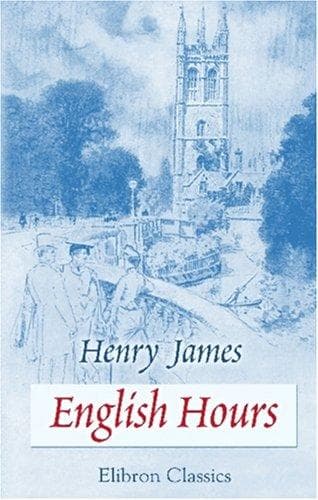
England -- Description and travel; James, Henry, 1843-1916 -- Travel -- England
Never was a secret more impenetrably kept. Read over the fragment—which
reaches, after all, to some two hundred and fifty pages; read over,
at the end of the volume, the interesting editorial notes; address
yourself, above all, in the charming series of introductions lately
prepared by Mrs. Richmond Ritchie for a new and, so far as possible,
biographical edition of her father’s works, to the reminiscences
briefly bearing on Denis, and you will remain in each case equally
distant from a clew. It is the most puzzling thing in the world, but
there _is_ no clew. There are indications, in respect to the book,
from Thackeray’s hand, memoranda on matters of detail, and there is in
especial a highly curious letter to his publisher; yet the clew that
his own mind must have held never shows the tip of its tail. The letter
to his publisher, in which, according to the editor of the fragment, he
“sketches his plot for the information of” that gentleman, reads like a
mystification by which the gentleman was to be temporarily kept quiet.
With an air of telling him a good deal, Thackeray really tells him
nothing—nothing, I mean, by which he himself would have been committed
to (any more than deterred from) any idea kept up his sleeve. If he
were holding this card back, to be played at his own time, he could
not have proceeded in the least differently; and one can construct
to-day, with a free hand, one’s picture of his private amusement at
the success of his diplomacy. All the while, what _was_ the card? The
production of a novel finds perhaps its nearest analogy in the ride
across country; the competent novelist—that is, the novelist with the
real seat—presses his subject, in spite of hedges and ditches, as hard
as the keen fox-hunter presses the game that has been started for his
day with the hounds. The fox is the novelist’s idea, and when he rides
straight, he rides, regardless of danger, in whatever direction that
animal takes. As we lay down “Denis Duval,” however, we feel not only
that we are off the scent, but that we never really have been, with
the author, on it. The fox has got quite away. For it carries us no
further, surely, to say—as may possibly be objected—that the author’s
subject was to have been neither more nor less than the adventures of
his hero; inasmuch as, turn the thing as we will, these “adventures”
could at the best have constituted nothing more than its _form_. It is
an affront to the memory of a great writer to pretend that they were
to have been arbitrary and unselected, that there was nothing in his
mind to determine them. The book was, obviously, to have been, as boys
say, “about” them. But what were _they_ to have been about? Thackeray
carried the mystery to his grave.
II
Public-domain text, read in full here on John Shaqi.
Reviews
Reviews
No reviews yet
Be the first to share your thoughts on this work.
Elsewhere in the archive
Join the Discussion
Join the discussion
Sign in to leave a comment or review.
Sign InorCreate an account