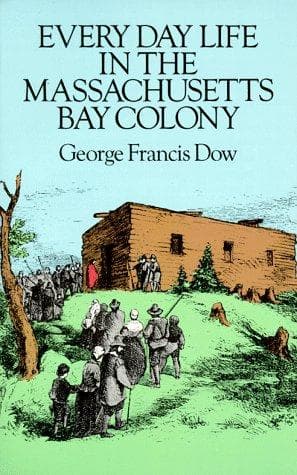
Every Day Life in the Massachusetts Bay ColonyDow, George Francis
History
Every Day Life in the Massachusetts Bay Colony
Dow, George Francis
Massachusetts -- Social life and customs -- To 1775
But what of Mr. Gilbert. Three years after his settlement Mr.
Perkins appeared in Court and presented a complaint in twenty-seven
particulars "that in public prayers and sermons, at several times
he uttered speeches of a high nature reproachful and scandalous to
the King's majestie & his government." He was summoned into Court
and bound over in £1000 to the next General Court where eventually
he was solemnly admonished publicly in open court by the Honored
Governor. With twenty-seven particulars, could a Scotchman restrain
his tongue? Mr. Gilbert could not, and shortly Mr. Perkins brought
two complaints of defamation of character. Mr. Gilbert also soon
developed a love of wine for it appears by the court papers that one
sacrament day, when the wine had been brought from the meetinghouse
and poured into the golden cup, Mr. Gilbert drank most of it with
the usual result, for he sank down in his chair, forgot to give
thanks, and sang a Psalm with lisping utterance. He was late at
the afternoon service, so that many went away before he came and
Thomas Baker testified "I perceived that he was distempered in his
head, for he did repeat many things many times over; in his prayer
he lisped and when he had done to prayer, he went to singing &
read the Psalm so that it could not be well understood and when he
had done singing he went to prayer again, and when he had done he
was going to sing again, but being desired to forbear used these
expressions: I bless God I find a great deal of comfort in it; and
coming out of the pulpit he said to the people I give you notice I
will preach among you no more." His faithful wife testified that
his conduct was due to a distemper that came upon him sometimes
when fasting and in rainy weather. The following April he was again
before the Court charged with many reproachful and reviling speeches
for which he was found guilty and sharply admonished and plainly
told "that if he shall find himself unable to demean himself more
soberly and christianly, as became his office, they do think it
more convenient for him to surcease from the exercise of any public
employment." The stubborn Scot refused to submit and affixing a
defiant paper to the meetinghouse door he deserted his office for
three successive Sabbaths, when his exasperated people petitioned
the Court to be freed from such "an intollerable burden" and so the
relation ceased but not until further suits and counter suits had
been tried for defamation, slander, and threatened assault.
Public-domain text, read in full here on John Shaqi.
Reviews
Reviews
No reviews yet
Be the first to share your thoughts on this work.
Elsewhere in the archive
Join the Discussion
Join the discussion
Sign in to leave a comment or review.
Sign InorCreate an account