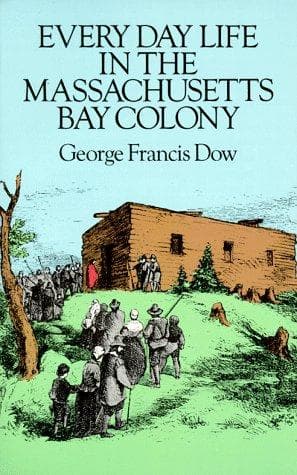
Every Day Life in the Massachusetts Bay ColonyDow, George Francis
History
Every Day Life in the Massachusetts Bay Colony
Dow, George Francis
Massachusetts -- Social life and customs -- To 1775
"Let no man make a jest at Pumpkins, for with this fruit the Lord
was pleased to feed his people to their good content, till Corne
and Cattell were increased," wrote Johnson. Later (by 1650) the
goodwives served "apples, pears and quince tarts instead of their
former Pumpkin Pies," and by that time wheat bread was no dainty.
Society in the Massachusetts Bay in the seventeenth century
was divided into several groups. First came the merchant class
which also included the ministers and those possessed of wealth.
Edward Randolph reported to the Lords of Trade in 1676, that in
Massachusetts there were about thirty merchants worth from £10,000.
to £20,000. "Most have considerable estates and a very great
trade." Next came the freemen and the skilled mechanics. This class
furnished the town officials and constituted the backbone of the
colony. Then came the unskilled laborer and a step lower was the
indentured servant. The merchant lived well and wore fine clothing
forbidden to his more humble neighbors. The status of the servant
may well be shown by the deposition presented in Court at Salem
in 1657 by an apprentice to a stone-mason in the town of Newbury,
Massachusetts, who testified that it was a long while before "he
could eate his master's food, viz. meate and milk, or drink beer,
saying that he did not know that it was good, because he was not
used to eat such victualls, but to eate bread and water porridge and
to drink water."[39]
[39] _Essex County Quarterly Court Records_, Vol. II, p. 28.
It has been stated frequently that in the olden times in New
England every one was obliged to go to church. The size of the
meetinghouses, the isolated locations of many of the houses, the
necessary care of the numerous young children, and the interesting
side-lights on the manners of the time which may be found in the
court papers, all go to show that the statement must not be taken
literally. Absence from meeting, breaking the Sabbath, carrying a
burden on the Lord's Day, condemning the church, condemning the
ministry, scandalous falling out on the Lord's Day, slandering the
church, and other misdemeanors of a similar character were frequent.
Public-domain text, read in full here on John Shaqi.
Reviews
Reviews
No reviews yet
Be the first to share your thoughts on this work.
Elsewhere in the archive
Join the Discussion
Join the discussion
Sign in to leave a comment or review.
Sign InorCreate an account