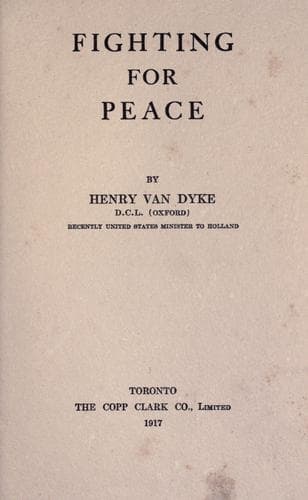
World War, 1914-1918 -- Germany; World War, 1914-1918 -- Personal narratives
The next morning, provided with permits which the German Military
Commandant had very courteously given us, we set out on our tour. The
journey became still more strange. The beautiful trees of the suburbs
were razed to the ground, the little villas stood empty, many of them
half-ruined. (Perhaps one of them belonged to our friend the
landscape-gardener.) We could see clearly the emplacements for the big
German guns, which had been secretly laid long before the war began,
concealed in cellars and beneath innocent-looking tennis-courts. The
ring-forts surrounding Antwerp were knocked to pieces, their huge
concrete gateways, their stone facings, their high earthworks, all
battered out of shape.
Town after town through which we passed lay half-destroyed or in
complete ruins. Wavre, Waelhem, Termonde, Duffel, Lierre, and many
smaller places were in various stages of destruction, burned or
shattered by shell fire and explosives. The heaps of bricks and stones
encumbered the streets so that it was hard to pick our way through. The
smell of decaying bodies tainted the air. The fields had been inundated
in the valleys; the water was subsiding; here and there corpses lay in
the mud. Old trenches everywhere; thousands of rudely heaped graves,
marked by two crossed sticks; miles on miles of rusty barbed-wire
defenses, with dead cows or horses entangled in them, slowly rotting,
haunted by the carrion crows.
Yet there were some people in the countryside. Now and then we saw a
woman or an old man digging in field or garden. We stopped at the front
yard of a little farmhouse, where the farmer's wife stood, and asked her
some directions about the road. She gave them cheerfully, though the
house at her back was little more than a mass of ruins.
"Were you here in the fighting?" we asked.
"But no, messieurs," she answered with a short laugh. "If I had been
here, I should not be here. I ran away to Holland and returned yesterday
to my house. But how shall I creep in?" She pointed over her shoulder to
the pile of bricks. "I am not a cat or a rat."
They are indomitable, those Flemish people. At Lierre we were very
hungry and searched vainly for an inn or a grocery. At last in one of
the streets we saw a little baker-shop. The upper story was riddled and
broken. But the shop was untouched, the window-shade half up, and
underneath we could see two loaves of bread. We went in. The bare-armed
baker met us.
"Can you sell us a little bread?"
"But certainly, messieurs, that is what I am here for. Not the window
loaves, however; I have a fresh loaf, if you please. Also a little
cheese, if you will."
"Were you here in the fighting?"
"Assuredly not! It was impossible. But I hurried back after three days.
You see, messieurs, some people were returning, and me--I am the Baker
of Lierre."
He said it as if it were a title of nobility.
Public-domain text, read in full here on John Shaqi.
Reviews
Reviews
No reviews yet
Be the first to share your thoughts on this work.
Join the Discussion
Join the discussion
Sign in to leave a comment or review.
Sign InorCreate an account