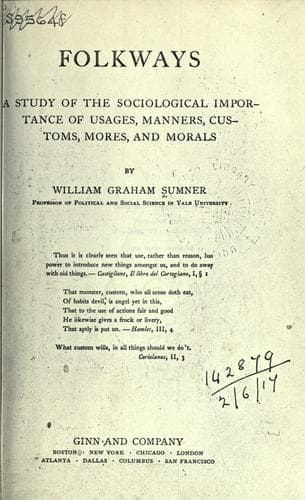
Folkways: A Study of the Sociological Importance of Usages, Manners, Customs, Mores, and MoralsSumner, William Graham
General
Folkways: A Study of the Sociological Importance of Usages, Manners, Customs, Mores, and Morals
Sumner, William Graham
Manners and customs
+108. Greek pessimism.+ It is true that this light-hearted, gay, and
artistic temper was boyish. Behind it there always was a pessimistic
world philosophy. The gods envied men any happiness and success, and
would cast down any one who was successful. The joyous temper always was
that of the man who has made up his mind to enjoy himself and forget,
since to take thought and care would do no good. This philosophy
embittered all prosperity. The epic heroes suffered painful ends, and
when the tragedians took up the stories again they heaped up crime and
woe.[131] Pessimism was in the myths. While things went well the life
policy of joyous carelessness overbore the pessimism, but when things
began to go ill the conviction arose that life is not worth living. The
abuses of democracy in the cities took away all the joy of success. It
was wisdom just to take things as they came. Life was not worth having,
for itself. If circumstances turned the balance of joy and pain so that
the latter predominated a little, suicide was a rational relief.
Religion did not cause this pessimism, but also it did not oppose it.
Suicide was no offense to the gods, because they did not give life.[132]
The Greeks held their doctrine of pessimism, the envy of the gods, etc.,
to be a correct induction from observation of life. Herodotus brought
back a conviction of it from his travels.[133] Tradition ascribed to
Solon the saying that "there is not a single happy mortal to be found
amongst all the sun shines on."[134]
Public-domain text, read in full here on John Shaqi.
Reviews
Reviews
No reviews yet
Be the first to share your thoughts on this work.
Elsewhere in the archive
Join the Discussion
Join the discussion
Sign in to leave a comment or review.
Sign InorCreate an account