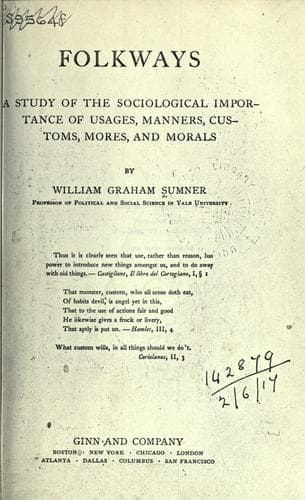
Folkways: A Study of the Sociological Importance of Usages, Manners, Customs, Mores, and MoralsSumner, William Graham
General
Folkways: A Study of the Sociological Importance of Usages, Manners, Customs, Mores, and Morals
Sumner, William Graham
Manners and customs
gave their own idea back again to the masses with the approval of the
societal authority. The masses insisted on having acts and apparatus
provided by which to satisfy their application of dogma. The power of
the keys and the treasure of salvation were provided accordingly. The
souls of the people were torn by the antagonism between the wild
passions of the age and the ecclesiastical restraints on conduct. They
feared the wrath of God and hell to come. The ritual and sacramental
system furnished a remedy. The flagellants were a phenomenon of
seething, popular passion, outside of the church and unapproved by its
authority. Antony of Padua ([Symbol: cross] 1231) started the movement
by his sermons on repentance and the wrath of God. Processions of
weeping, praying, self-scourging, and half-naked penitents appeared in
the streets of all the towns of Christendom. "Nearly all enemies made
friends. Usurers and robbers made haste to restore ill-gotten goods, and
other vicious men confessed and renounced vanity. Prisons were opened.
Prisoners were released. Exiles were allowed to return. Men and women
accomplished works of pity and holiness, as if they feared the
all-powerful God would consume them with fire from heaven."[443] This
movement was altogether popular. It broke out again in 1349, in
connection with the Black Death. Flagellation for thirty-three and a
half days was held to purge from all sin. This was heresy and the
flagellants were persecuted. The theory was a purely popular application
by the masses of the church doctrine of penance, outside of the church
system. It reappeared from time to time. The dancing mania began at
Aix-la-Chapelle in 1373 and lasted for several years.[444] It was an
outlet for high nervous tension under which the population was suffering
on account of great calamities, social distress, and superstitious
interpretations of the same. In short, the period was one of monstrous
phenomena, extravagant passions, and unreasonable acts.
Public-domain text, read in full here on John Shaqi.
Reviews
Reviews
No reviews yet
Be the first to share your thoughts on this work.
Elsewhere in the archive
Join the Discussion
Join the discussion
Sign in to leave a comment or review.
Sign InorCreate an account