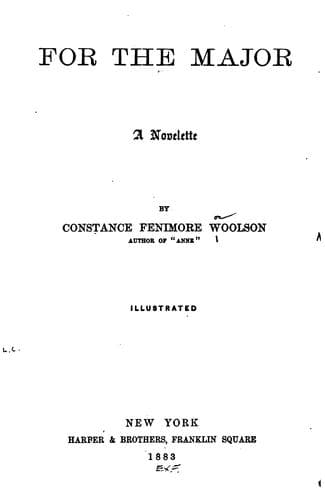
For the Major: A NoveletteWoolson, Constance Fenimore
General
For the Major: A Novelette
Woolson, Constance Fenimore
Psychological fiction; United States -- Social life and customs -- 19th century -- Fiction
Madam Carroll rose, came across, and kissed her. "My dear," she said, "a
wife has more opportunities than a daughter can have; that is all. The
Major loves you as much as ever. He is also very proud of you. So proud,
indeed, that he has a great desire to have you proud of him as well; you
always have been extremely proud of him, you know, and he remembers it.
This feeling causes him, perhaps, to make something of--of an effort
when he is with you, an effort to appear in every respect himself, as he
was before his illness--as he was when you last saw him. This effort is
at times fatiguing to him; yet it is probable that he will not
relinquish it while he feels that you are noticing or--or comparing. I
have not spoken of this before, because you have never liked to have me
tell you anything about your father; even as a child you always wanted
to get your knowledge directly from him, not from me. I have never found
fault with this, because I knew that it came from your great love for
him. As I love him too, I have tried to please, or at least not to
displease, his daughter; not to cross her wishes, her ideas; not to seem
to her officious, presuming. Yet at the same time remember that I love
him probably as much as you do. But now that you have asked me, now
that I know you wish me to speak, I will say that if you could remove
all necessity for the effort your father now makes, by placing yourself
so fully upon a lower plane--if I may so express it--that his former
self should not be suggested to him by anything in _you_, in your words,
looks, or manner, you would soon find, I think, that this slight--slight
constraint you have noticed was at an end. In addition, he himself would
be more comfortable. And our dearest wish is of course to make him happy
and comfortable, to keep him so."
As she uttered these sentences quietly, guardedly, Sara had grown very
pale. Her eyes, large and dark with pain, were searching her
step-mother's fair little face. But Madam Carroll's gaze was fixed upon
the window opposite; not until she had brought all her words to a close
did she let it drop upon her daughter. Then the two women looked at each
other. The girl's eyes asked a mute question, a question which the
wife's eyes, seeing that it was an appeal to her closer knowledge, at
length answered--answered bravely and clearly, sympathetically, too, and
with tenderness, but--in the affirmative.
Then the daughter bowed her head, her face hidden in her hands.
Public-domain text, read in full here on John Shaqi.
Reviews
Reviews
No reviews yet
Be the first to share your thoughts on this work.
Join the Discussion
Join the discussion
Sign in to leave a comment or review.
Sign InorCreate an account