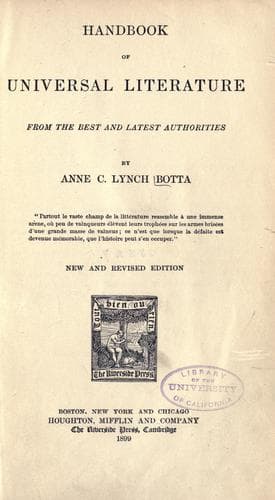
Handbook of Universal Literature, From the Best and Latest AuthoritiesBotta, Anne C. Lynch (Anne Charlotte Lynch)
History
Handbook of Universal Literature, From the Best and Latest Authorities
Botta, Anne C. Lynch (Anne Charlotte Lynch)
Literature -- History and criticism
Leo X. shed over the dramatic art the same favor which he bestowed on the
other liberal arts, and the theatricals of the Vatican were of the most
splendid description. During his pontificate, Trissino (1478-1550)
dedicated to him the tragedy of "Sofonisba," formed on the Greek model,
the first regular tragedy which had appeared since the revival of letters.
Its subject is found entire in the work of Livy, and the invention of the
poet has added little to the records of the historian. The piece is not
divided into acts and scenes, and the only repose given to the action is
by the chorus, who sing odes and lyric stanzas. The story is well
conducted, the characters are all dramatic, and the incidents arise
spontaneously out of each other; but the style of the tragedy has neither
the sublimity nor the originality which becomes this kind of composition,
and which distinguished the genius of the dramatic poets of Athens.
The example of Trissino was followed by Rucellai (1475-1525), who left two
dramas, "Rosamunda" and "Orestes," written in blank verse, with a chorus,
much resembling the Greek tragedies. This poet used much more license with
his subject than Trissino; his plot is less simple and pathetic, but
abounds in horror, and his style is florid and rhetorical. Tasso, Speroni
(1500-1588), Giraldi (1504-1573), and others, attempted also this species
of composition, and their dramas are considered the best of the age.
As the tragic poets of this century servilely imitated Sophocles and
Euripides, the comic writers copied Plautus and Terence. The comedies of
Ariosto, of which there are five, display considerable ingenuity of
invention and an elegant vivacity of language. The dramatic works of
Machiavelli approach more nearly to the middle comedy of the Greeks. They
depict and satirize contemporaneous rather than obsolete manners, but the
characters and plots awaken little interest.
Public-domain text, read in full here on John Shaqi.
Reviews
Reviews
No reviews yet
Be the first to share your thoughts on this work.
Elsewhere in the archive
Join the Discussion
Join the discussion
Sign in to leave a comment or review.
Sign InorCreate an account