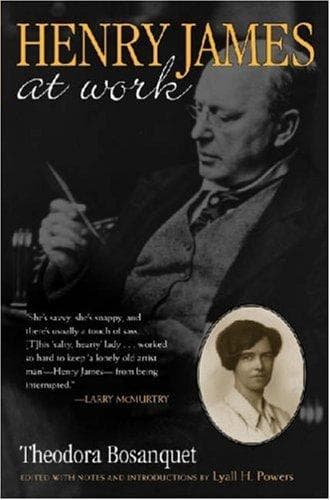
Authors, American -- 19th century -- Biography; James, Henry, 1843-1916
His nationality saved Henry James from the common English necessity of
taking a side in the political game; and in the United States nobody of
his world had expected him to be interested in politics. There is a
pleasant account in _The Middle Years_ of his blankness when he was
asked at a London breakfast-table for "distinctness about General
Grant's first cabinet, upon the formation of which the light of the
newspaper happened then to beat." The question was embarrassing. "There
were, it appeared, things of interest taking place in America, and I had
had, in this absurd manner, to come to England to learn it: I had had
over there on the ground itself no conception of any such
matter--nothing of the smallest interest, by any perception of mine, as
I suppose I should still blush to recall, had taken place in America
since the War." Nothing of any great public interest, by any perception
of his, was to take place in Europe until the outbreak of another war at
that time far beyond the range of speculation. But if cabinets and
parties and politics were and remained outside the pale of his
sensibility, he was none the less charmed by the customs of a country
where Members of Parliament and Civil Servants could meet together for a
leisurely breakfast, thus striking "the exciting note of a social order
in which everyone wasn't hurled straight, with the momentum of rising,
upon an office or a store."
IX
Henry James came to England to admire. But his early reverence for the
men and women of an island with so fine and ancient a historic tone as
Great Britain soon faded. He had forgotten, in the first passion of
acquaintance, that the English are born afresh in every generation and
are about as new as young Americans, differing from them chiefly in
having other forms of domestic and ecclesiastical architecture and
smoother lawns to take for granted. He looked at old stone castles and
Tudor brickwork, at great hanging eaves and immemorial gardens, and then
he looked at the heirs of this heritage and listened intently for their
speech. This was disappointing, partly because they spoke so little. "I
rarely remember," he wrote when he had lived through several London
months, "to have heard on English lips any other intellectual verdict
(no matter under what provocation) than this broad synthesis 'so
immensely clever.' What exasperates you is not that they can't say more
but that they wouldn't if they could."
Public-domain text, read in full here on John Shaqi.
Reviews
Reviews
No reviews yet
Be the first to share your thoughts on this work.
Join the Discussion
Join the discussion
Sign in to leave a comment or review.
Sign InorCreate an account