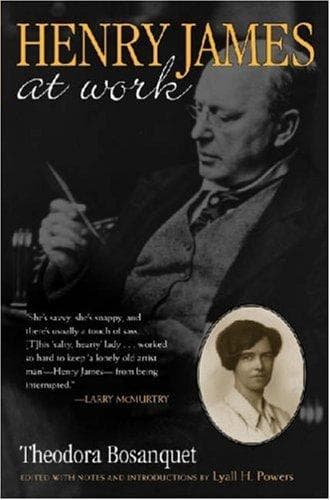
Authors, American -- 19th century -- Biography; James, Henry, 1843-1916
For the volumes of memories, _A Small Boy and Others, Notes of a Son and
Brother_, and the uncompleted _Middle Years_, no preliminary work was
needed. A straight dive into the past brought to the surface treasure
after treasure, a wealth of material which became embarrassing. The
earlier book was begun in 1911, after Henry James had returned from a
year in the United States, where he had been called by his brother's
fatal illness. He had come back, after many seasons of country solitude,
to his former love of the friendly London winter, and for the first few
months after his return from America he lodged near the Reform Club and
came to the old house in Chelsea where I was living and where he had
taken a room for his work. It was a quiet room, long and narrow and
rather dark--he used to speak of it as "my Chelsea cellar." There he
settled down to write what, as he outlined it to me, was to be a set of
notes to his brother William's early letters, prefaced by a brief
account of the family into which they were both born. But an entire
volume of memories was finished before bringing William to an age for
writing letters, and _A Small Boy_ came to a rather abrupt end as a
result of the writer's sudden decision that a break must be made at once
if the flood of remembrance was not to drown his pious intention.
It was extraordinarily easy for him to recover the past; he had always
been sensitive to impressions and his mind was stored with records of
exposure. All he had to do was to render his sense of those records as
adequately as he could. Each morning, after reading over the pages
written the day before, he would settle down in a chair for an hour or
so of conscious effort. Then, lifted on a rising tide of inspiration, he
would get up and pace up and down the room, sounding out the periods in
tones of resonant assurance. At such times he was beyond reach of
irrelevant sounds or sights. Hosts of cats--a tribe he usually routed
with shouts of execration--might wail outside the window, phalanxes of
motor-cars bearing dreaded visitors might hoot at the door. He heard
nothing of them. The only thing that could arrest his progress was the
escape of the word he wanted to use. When that had vanished he broke off
the rhythmic pacing and made his way to a chimney-piece or book-case
tall enough to support his elbows while he rested his head in his hands
and audibly pursued the fugitive.
[Footnote 1: _The Ivory Tower_ (Collini, 1917), p. 341.]
IV
Public-domain text, read in full here on John Shaqi.
Reviews
Reviews
No reviews yet
Be the first to share your thoughts on this work.
Join the Discussion
Join the discussion
Sign in to leave a comment or review.
Sign InorCreate an account