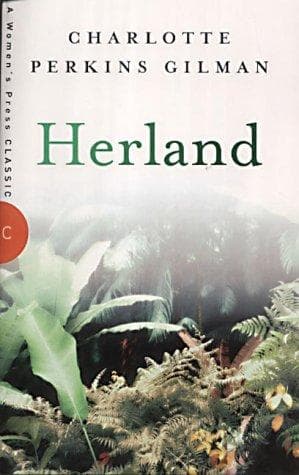
Black humor; Utopian fiction; Utopias -- Fiction; Women -- Fiction
Then they asked about our methods, and found first that “we” did so and
so, and then that other nations did differently. Upon which they wanted
to know which method has been proved best--and we had to admit that
so far as we knew there had been no attempt at comparison, each people
pursuing its own custom in the fond conviction of superiority, and
either despising or quite ignoring the others.
With these women the most salient quality in all their institutions was
reasonableness. When I dug into the records to follow out any line of
development, that was the most astonishing thing--the conscious effort
to make it better.
They had early observed the value of certain improvements, had easily
inferred that there was room for more, and took the greatest pains to
develop two kinds of minds--the critic and inventor. Those who showed
an early tendency to observe, to discriminate, to suggest, were given
special training for that function; and some of their highest officials
spent their time in the most careful study of one or another branch of
work, with a view to its further improvement.
In each generation there was sure to arrive some new mind to detect
faults and show need of alterations; and the whole corps of inventors
was at hand to apply their special faculty at the point criticized, and
offer suggestions.
We had learned by this time not to open a discussion on any of their
characteristics without first priming ourselves to answer questions
about our own methods; so I kept rather quiet on this matter of
conscious improvement. We were not prepared to show our way was better.
There was growing in our minds, at least in Jeff’s and mine, a
keen appreciation of the advantages of this strange country and its
management. Terry remained critical. We laid most of it to his nerves.
He certainly was irritable.
The most conspicuous feature of the whole land was the perfection of
its food supply. We had begun to notice from that very first walk in the
forest, the first partial view from our ‘plane. Now we were taken to see
this mighty garden, and shown its methods of culture.
The country was about the size of Holland, some ten or twelve
thousand square miles. One could lose a good many Hollands along the
forest-smothered flanks of those mighty mountains. They had a population
of about three million--not a large one, but quality is something. Three
million is quite enough to allow for considerable variation, and these
people varied more widely than we could at first account for.
Terry had insisted that if they were parthenogenetic they’d be as alike
as so many ants or aphids; he urged their visible differences as proof
that there must be men--somewhere.
Public-domain text, read in full here on John Shaqi.
Reviews
Reviews
No reviews yet
Be the first to share your thoughts on this work.
Join the Discussion
Join the discussion
Sign in to leave a comment or review.
Sign InorCreate an account