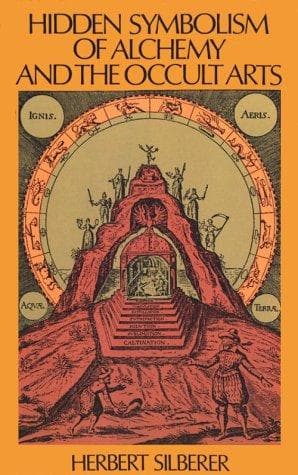
Hidden Symbolism of Alchemy and the Occult ArtsSilberer, Herbert
Religion
Hidden Symbolism of Alchemy and the Occult Arts
Silberer, Herbert
Alchemy; Society of Rosicrucians; Symbolism (Psychology)
From the beginning of the 17th century attempts were made inside the
fraternity, as the company societies working in the same spirit may be
called, to bring to more general recognition a suitable name for this
company, which could also form a uniting bond for the scattered single
organizations. The leaders knew and occasionally said that a respected
name for the common interest would be advantageous. This view appears
especially in the letters of Comenius. It was then indeed an undecided
question what nation should place itself at the head of the great
undertaking. (Keller, in the M. H. der C. G., 1895, p. 156.) “As a matter
of fact precisely in the years when in Germany the brothers had won the
support of powerful princes and the movement received a great impetus,
very decided efforts were made both to create larger unions and to adopt a
unifying name. The founding of the Society of the Palmtree [1617] was the
result of the earlier effort and the writings of Andreaes on the alleged
origin and aims of the rosicrucians are connected with the other need. The
battle of the White Mountain and the unfortunate consequences that
followed killed both attempts, as it were, in the germ.” (Z. Gesch, d.
Bauh., p. 20.) Note by the way that the name of the “Fraternity of the Red
Cross” was taken from symbols which were already employed in the
societies. In regard to this it is quite mistaken accuracy to maintain
that it was correctly called “Bruderschaft des Rosenkreutz” and not “des
Rosenkreutzes,” as the “Handbuch d. Freimaurerei,” p. 259, emends it.
Vatter Christian Rosenkreutz is indeed evidently only a composite
legendary personage as the bearer of a definite symbolism (Christ, rose,
cross), (and may have been devised merely in jest). The name does not come
from the personality of the founder but the personality of the founder
comes from the name. The symbols and expressions that lie at the
foundations are the earlier.
Public-domain text, read in full here on John Shaqi.
Reviews
Reviews
No reviews yet
Be the first to share your thoughts on this work.
Elsewhere in the archive
Join the Discussion
Join the discussion
Sign in to leave a comment or review.
Sign InorCreate an account