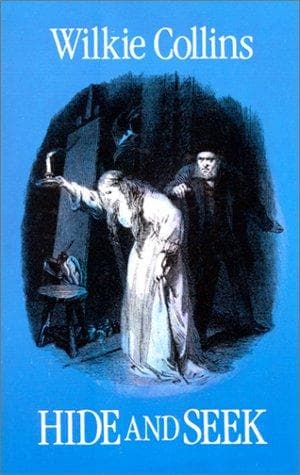
Deaf women -- Fiction; Father figures -- Fiction; Painters -- Fiction; Psychological fiction; Young men -- Fiction
“Ah, rain! rain! rain!” muttered Mr. Goodworth, staring desperately out
at the miserable prospect, while Zack amused himself by rubbing his nose
vacantly backwards and forwards against a pane of glass. “Rain!
rain! Nothing but rain and fog in November. Hold up, Zack! Ding-dong,
ding-dong; there go the bells for afternoon church! I wonder whether it
will be fine to-morrow? Think of the pudding, my boy!” whispered the old
gentleman with a benevolent remembrance of the consolation which that
thought had often afforded to him, when he was a child himself.
“Yes,” said Zack, acknowledging the pudding suggestion, but declining to
profit by it. “And, please, when I’ve had my dinner, will somebody put
me to bed?”
“Put you to bed!” exclaimed Mr. Goodworth. “Why, bless the boy! what’s
come to him now? He used always to be wanting to stop up.”
“I want to go to bed, and get to to-morrow, and have my picture-book,”
was the weary and whimpering answer.
“I’ll be hanged, if I don’t want to go to bed too!” soliloquized the old
gentleman under his breath, “and get to to-morrow, and have my ‘Times’
at breakfast. I’m as bad as Zack, every bit!”
“Grandpapa,” continued the child, more wearily than before, “I want to
whisper something in your ear.”
Mr. Goodworth bent down a little. Zack looked round cunningly towards
his father--then putting his mouth close to his grandfather’s ear,
communicated the conclusion at which he had arrived, after the events of
the day, in these words--
_“I say, granpapa, I hate Sunday!”_
BOOK I. THE HIDING.
CHAPTER I. A NEW NEIGHBORHOOD, AND A STRANGE CHARACTER.
At the period when the episode just related occurred in the life of Mr.
Zachary Thorpe the younger--that is to say, in the year 1837--Baregrove
Square was the farthest square from the city, and the nearest to the
country, of any then existing in the north-western suburb of London.
But, by the time fourteen years more had elapsed--that is to say, in
the year 1851--Baregrove Square had lost its distinctive character
altogether; other squares had filched from it those last remnants of
healthy rustic flavor from which its good name had been derived; other
streets, crescents, rows, and villa-residences had forced themselves
pitilessly between the old suburb and the country, and had suspended
for ever the once neighborly relations between the pavement of Baregrove
Square and the pathways of the pleasant fields.
Public-domain text, read in full here on John Shaqi.
Reviews
Reviews
No reviews yet
Be the first to share your thoughts on this work.
Join the Discussion
Join the discussion
Sign in to leave a comment or review.
Sign InorCreate an account