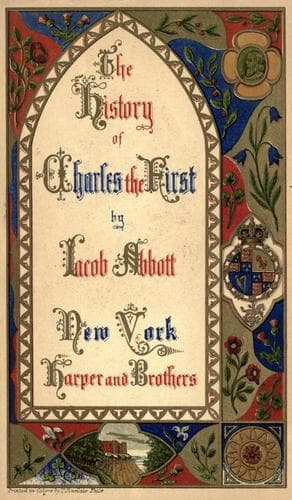
History of King Charles the First of EnglandAbbott, Jacob
History
History of King Charles the First of England
Abbott, Jacob
Charles I, King of England, 1600-1649; Great Britain -- History -- Charles I, 1625-1649; Great Britain -- Kings and rulers -- Biography
In the mean time, the Scots, a year or two before this, had raised an
army and crossed the northern frontier, and entered England. They were
against monarchy and Episcopacy, but they were, in some respects, a
separate enemy from those against whom the king had been contending so
long; and he began to think that he had perhaps better fall into their
hands than into those of his English foes, if he must submit to one or
to the other. He hesitated for some time what course to take; but at
last, after receiving representations of the favorable feeling which
prevailed in regard to him in the Scottish army, he concluded to make
his escape from Oxford and surrender himself to them. He accordingly did
so, and the civil war was ended.
CHAPTER X.
THE CAPTIVITY.
The circumstances of King Charles's surrender to the Scots were these.
He knew that he was surrounded by his enemies in Oxford, and that they
would not allow him to escape if they could prevent it. He and his
friends, therefore, formed the following plan to elude them.
[Sidenote: The king's escape from Hampton Court.]
They sent word to the commanders of each of the several gates of the
city, on a certain day, that during the ensuing night three men would
have to pass out on business of the king's, and that when the men
should appear and give a certain signal, they were to be allowed to
pass. The officer at each gate received this command without knowing
that a similar one had been sent to the others.
[Illustration: NEWARK.]
Accordingly, about midnight, the parties of men were dispatched, and
they went out at the several gates. The king himself was in one of
these parties. There were two other persons with him. One of these
persons was a certain Mr. Ashburnham, and the king was disguised as
his servant. They were all on horseback, and the king had a valise upon
the horse behind him, so as to complete his disguise. This was on the
27th of April. The next day, or very soon after, it was known at Oxford
that his majesty was gone, but no one could tell in what direction, for
there was no means even of deciding by which of the gates he had left
the city.
[Sidenote: The king delivers himself to the Scots.]
[Sidenote: His reception.]
Public-domain text, read in full here on John Shaqi.
Reviews
Reviews
No reviews yet
Be the first to share your thoughts on this work.
Elsewhere in the archive
Join the Discussion
Join the discussion
Sign in to leave a comment or review.
Sign InorCreate an account