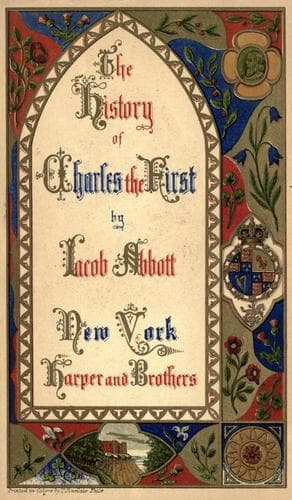
History of King Charles the First of EnglandAbbott, Jacob
History
History of King Charles the First of England
Abbott, Jacob
Charles I, King of England, 1600-1649; Great Britain -- History -- Charles I, 1625-1649; Great Britain -- Kings and rulers -- Biography
The Scotch were, at this time, encamped before the town of Newark,
which is on the Trent, in the heart of England, and about one hundred
and twenty miles north of London. There was a magnificent castle at
Newark in those days, which made the place very strong. The town held
out for the king; for, though they had been investing it for some time,
they had not yet succeeded in compelling the governor to surrender.
The king concluded to proceed to Newark and enter the Scottish camp.
He considered it, or, rather, tried to have it considered, that he was
coming to join them as their monarch. _They_ were going to consider
it surrendering to them as their prisoner. The king himself must have
known how it would be, but it made his sense of humiliation a little
less poignant to carry this illusion with him as long as it was
possible to maintain it.
[Sidenote: Proclamation by Parliament.]
As soon as the Parliament found that the king had made his escape from
Oxford, they were alarmed, and on the 4th of May they issued an order
to this effect, "That what person soever should harbor and conceal, or
should know of the harboring or concealing of the king's person, and
should not immediately reveal it to the speakers of both houses, should
be proceeded against as a traitor to the Commonwealth, and die without
mercy." The proclamation of this order, however, did not result in
arresting the flight of the king. On the day after it was issued, he
arrived safely at Newark.
[Sidenote: Surrender of Newark.]
The Scottish general, whose name was Lesley, immediately represented
to the king that for his own safety it was necessary that they should
retire toward the northern frontier; but they could not so retire, he
said, unless Newark should first surrender. They accordingly induced
the king to send in orders to the governor of the castle to give up the
place. The Scots took possession of it, and, after having garrisoned
it, moved with their army toward the north, the king and General Lesley
being in the van.
[Sidenote: Negotiations about the disposal of the king's person.]
Public-domain text, read in full here on John Shaqi.
Reviews
Reviews
No reviews yet
Be the first to share your thoughts on this work.
Elsewhere in the archive
Join the Discussion
Join the discussion
Sign in to leave a comment or review.
Sign InorCreate an account