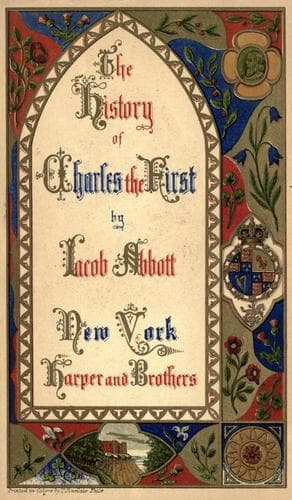
History of King Charles the First of EnglandAbbott, Jacob
History
History of King Charles the First of England
Abbott, Jacob
Charles I, King of England, 1600-1649; Great Britain -- History -- Charles I, 1625-1649; Great Britain -- Kings and rulers -- Biography
They treated the king with great distinction, but guarded him very
closely, and sent word to the Parliament that he was in their
possession. There ensued long negotiations and much debate. The
question was, at first, whether the English or Scotch should have the
disposal of the king's person. The English said that _they_, and not
the Scots, were the party making war upon him; that they had conquered
his armies, and hemmed him in, and reduced him to the necessity of
submission; and that he had been taken captive on English soil, and
ought, consequently, to be delivered into the hands of the English
Parliament. The Scots replied that though he had been taken in England,
he was their king as well as the king of England, and had made himself
their enemy; and that, as he had fallen into their hands, he ought to
remain at their disposal. To this the English rejoined, that the Scots,
in taking him, had not acted on their own account, but as the allies,
and, as it were, the agents of the English, and that they ought to
consider the king as a captive taken for them, and hold him subject to
their disposal.
They could not settle the question. In the mean time the Scottish army
drew back toward the frontier, taking the king with them.
[Sidenote: The Scots surrender the king.]
About this time a negotiation sprung up between the Parliament and
the Scots for the payment of the expenses which the Scottish army had
incurred in their campaign. The Scots sent in an account amounting
to two millions of pounds. The English objected to a great many of
the charges, and offered them two hundred thousand pounds. Finally it
was settled that four hundred thousand pounds should be paid. This
arrangement was made early in September. In January the Scots agreed to
give up the king into the hands of the English Parliament.
[Sidenote: Whether he was sold.]
The world accused the Scots of selling their king to his enemies
for four hundred thousand pounds. The Scots denied that there was
any connection between the two transactions above referred to. They
received the money on account of their just claims; and they afterward
agreed to deliver up the king, because they thought it right and proper
so to do. The friends of the king, however, were never satisfied
that there was not a secret understanding between the parties, that
the money paid was not the price of the king's delivery; and as this
delivery resulted in his death, they called it the price of blood.
[Sidenote: The king's amusements in captivity.]
Public-domain text, read in full here on John Shaqi.
Reviews
Reviews
No reviews yet
Be the first to share your thoughts on this work.
Elsewhere in the archive
Join the Discussion
Join the discussion
Sign in to leave a comment or review.
Sign InorCreate an account