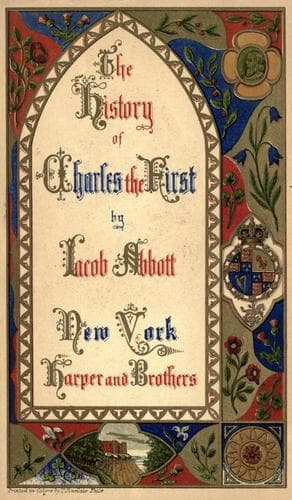
History of King Charles the First of EnglandAbbott, Jacob
History
History of King Charles the First of England
Abbott, Jacob
Charles I, King of England, 1600-1649; Great Britain -- History -- Charles I, 1625-1649; Great Britain -- Kings and rulers -- Biography
The House of Commons did not dare to trust the trial of the king to
the Peers, according to the provisions of the English Constitution,
and so they passed an ordinance for attainting him of high treason,
and for appointing _commissioners_, themselves, to try him. Of course,
in appointing these commissioners, they would name such men as they
were sure would be predisposed to condemn him. The Peers rejected
this ordinance, and adjourned for nearly a fortnight, hoping thus to
arrest any further proceedings. The Commons immediately voted that the
action of the Peers was not necessary, and that they would go forward
themselves. They then appointed the commissioners, and ordered the
trial to proceed.
[Sidenote: The king brought to London.]
Every thing connected with the trial was conducted with great state
and parade. The number of commissioners constituting the court was
one hundred and thirty-three, though only a little more than half that
number attended the trial. The king had been removed from Hurst Castle
to Windsor Castle, and he was now brought into the city, and lodged in
a house near to Westminster Hall, so as to be at hand. On the appointed
day the court assembled; the vast hall and all the avenues to it were
thronged. The whole civilized world looked on, in fact, in astonishment
at the almost unprecedented spectacle of a king tried for his life by
an assembly of his subjects.
[Sidenote: Roll of commissioners.]
The first business after the opening of the court was to call the roll
of the commissioners, that each one might answer to his name. The name
of the general of the army, Fairfax, who was one of the number, was the
second upon the list. When his name was called there was no answer. It
was called again. A voice from one of the galleries replied, "He has
too much wit to be here." This produced some disorder, and the officers
called out to know who answered in that manner, but there was no reply.
Afterward, when the impeachment was read, the phrase occurred, "Of all
the people of England," when the same voice rejoined, "No, not the half
of them." The officers then ordered a soldier to fire into the seat
from which these interruptions came. This command was not obeyed, but
they found, on investigating the case, that the person who had answered
thus was Fairfax's wife, and they immediately removed her from the hall.
[Sidenote: The king brought into court.]
[Sidenote: His firmness.]
Public-domain text, read in full here on John Shaqi.
Reviews
Reviews
No reviews yet
Be the first to share your thoughts on this work.
Elsewhere in the archive
Join the Discussion
Join the discussion
Sign in to leave a comment or review.
Sign InorCreate an account