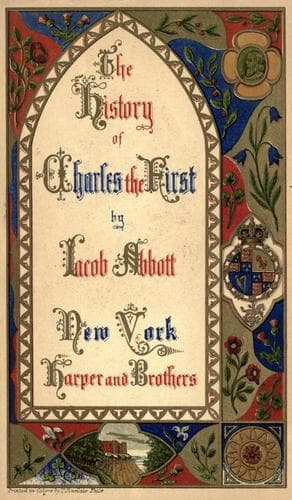
History of King Charles the First of EnglandAbbott, Jacob
History
History of King Charles the First of England
Abbott, Jacob
Charles I, King of England, 1600-1649; Great Britain -- History -- Charles I, 1625-1649; Great Britain -- Kings and rulers -- Biography
When the court was fully organized, they commanded the sergeant-at-arms
to bring in the prisoner. The king was accordingly brought in, and
conducted to a chair covered with crimson velvet, which had been placed
for him at the bar. The judges remained in their seats, with their
heads covered, while he entered, and the king took his seat, keeping
his head covered too. He took a calm and deliberate survey of the
scene, looking around upon the judges, and upon the armed guards by
which he was environed, with a stern and unchanging countenance. At
length silence was proclaimed, and the president rose to introduce the
proceedings.
He addressed the king. He said that the Commons of England, deeply
sensible of the calamities which had been brought upon England by
the civil war, and of the innocent blood which had been shed, and
convinced that he, the king, had been the guilty cause of it, were
now determined to make inquisition for this blood, and to bring him to
trial and judgment; that they had, for this purpose, organized this
court, and that he should now hear the charge brought against him,
which they would proceed to try.
[Sidenote: The charge.]
[Sidenote: The king interrupts its reading.]
An officer then arose to read the charge. The king made a gesture for
him to be silent. He, however, persisted in his reading, although the
king once or twice attempted to interrupt him. The president, too,
ordered him to proceed. The charge recited the evils and calamities
which had resulted from the war, and concluded by saying that "the said
Charles Stuart is and has been the occasioner, author, and continuer
of the said unnatural, cruel, and bloody wars, and is therein guilty
of all the treasons, murders, rapines, burnings, spoils, desolations,
damages, and mischiefs to this nation acted and committed in the said
wars, or occasioned thereby."
The president then sharply rebuked the king for his interruptions
to the proceedings, and asked him what answer he had to make to the
impeachment. The king replied by demanding by what authority they
pretended to call him to account for his conduct. He told them that
he was their king, and they his subjects; that they were not even the
Parliament, and that they had no authority from any true Parliament to
sit as a court to try him; that he would not betray his own dignity
and rights by making any answer at all to any charges they might bring
against him, for that would be an acknowledgment of their authority;
but he was convinced that there was not one of them who did not in his
heart believe that he was wholly innocent of the charges which they had
brought against him.
[Sidenote: The king objects to the jurisdiction of the court.]
Public-domain text, read in full here on John Shaqi.
Reviews
Reviews
No reviews yet
Be the first to share your thoughts on this work.
Elsewhere in the archive
Join the Discussion
Join the discussion
Sign in to leave a comment or review.
Sign InorCreate an account