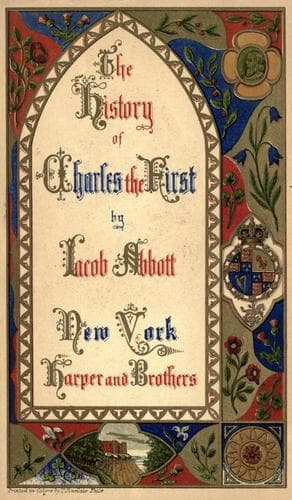
History of King Charles the First of EnglandAbbott, Jacob
History
History of King Charles the First of England
Abbott, Jacob
Charles I, King of England, 1600-1649; Great Britain -- History -- Charles I, 1625-1649; Great Britain -- Kings and rulers -- Biography
So they kept sending embassadors back and forth, with drafts of
treaties, articles, conditions, and stipulations without number.
There were endless discussions about securing to Donna Maria the full
enjoyment of the Catholic religion in England, and express agreements
were proposed and debated in respect to her having a chapel, and
priests, and the right to celebrate mass, and to enjoy, in fact, all
the other privileges which she had been accustomed to exercise in her
own native land. James did not object. He agreed to every thing; but
still, some how or other, the arrangement could not be closed. There
was always some pretext for delay.
[Sidenote: Buckingham's proposal.]
[Sidenote: Nature of the adventure.]
At last Buckingham proposed to Charles that they two should set off
for Spain in person, and see if they could not settle the affair.
Buckingham's motive was partly a sort of reckless daring, which made
him love any sort of adventure, and partly a desire to circumvent and
thwart a rival of his, the Earl of Bristol, who had charge of the
negotiations. It may seem to the reader that a simple journey from
London to Madrid, of a young man, for the purpose of visiting a lady
whom he was wishing to espouse, was no such extraordinary undertaking
as to attract the attention of a spirited young man to it from love
of adventure. The truth is, however, that, with the ideas that then
prevailed in respect to royal etiquette, there was something very
unusual in this plan. The prince and Buckingham knew very well that the
consent of the statesmen and high officers of the realm could never be
obtained, and that their only alternative was, accordingly, to go off
secretly and in disguise.
[Sidenote: Buckingham's dissimulation.]
It seemed, however, to be rather necessary to get the king's consent.
But Buckingham did not anticipate much difficulty in this, as he was
accustomed to manage James almost like a child. He had not, however,
been on very good terms with Charles, having been accustomed to treat
him in the haughty and imperious manner which James would usually
yield to, but which Charles was more inclined to resist and resent.
When Buckingham, at length, conceived of this scheme of going into
Spain, he changed his deportment toward Charles, and endeavored, by
artful dissimulation, to gain his kind regard. He soon succeeded, and
then he proposed his plan.
Public-domain text, read in full here on John Shaqi.
Reviews
Reviews
No reviews yet
Be the first to share your thoughts on this work.
Join the Discussion
Join the discussion
Sign in to leave a comment or review.
Sign InorCreate an account