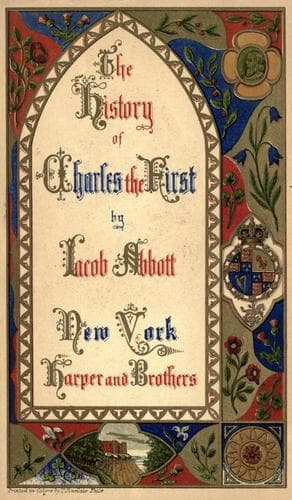
History of King Charles the First of England — John Shaqi
History of King Charles the First of EnglandAbbott, Jacob
History
History of King Charles the First of England
Abbott, Jacob
Charles I, King of England, 1600-1649; Great Britain -- History -- Charles I, 1625-1649; Great Britain -- Kings and rulers -- Biography
The kings themselves of this Stuart race--which race includes Mary
Queen of Scots, the mother of the line, and James I., Charles I.,
Charles II., and James II.--entertained very high ideas of these
hereditary rights of theirs to govern the realm of England. They felt
a determination to maintain these rights and powers at all hazards.
Charles ascended the throne with these feelings, and the chief point of
interest in the history of his reign is the contest in which he engaged
with the English people in his attempts to maintain them.
[Sidenote: Parliament.]
[Sidenote: The Legislature in the United States.]
The body with which the king came most immediately into conflict
in this long struggle were the two houses of Parliament. And here
American readers are very liable to fall into a mistake by considering
the houses of Parliament as analogous to the houses of legislation
in the various governments of this country. In our governments the
chief magistrate has only to execute definite and written laws and
ordinances, passed by the Legislature, and which the Legislature may
pass with or without his consent; and when enacted, he must be governed
by them. Thus the president or the governor is, in a certain sense,
the agent and officer of the legislative power of the state, to carry
into effect its decisions, and this _legislative_ power has really the
control.
[Sidenote: The nature of Parliament.]
By the ancient Constitution of England, however, the Parliament was
merely a body of counselors, as it were, summoned by the king to give
him their advice, to frame for him such laws as he wanted to have
framed, and to aid him in raising funds by taxing the people. The king
might call this council or not, as he pleased. There was no necessity
for calling it unless he needed more funds than he could raise by his
own resources. When called, they felt that they had come, in a great
measure, to aid the king in doing his will. When they framed a law,
they sent it to him, and if he was satisfied with it, he _made it law_.
It was the king who really enacted it. If he did not approve the law,
he wrote upon the parchment which contained it, "The king will think of
it," and that was the end. The king would call upon them to assess a
tax and collect the money, and would talk to them about his plans, and
his government, and the aid which he wanted from them to enable him to
accomplish what he had himself undertaken. In fact, the king was the
government, and the houses of Parliament his instruments to aid him in
giving effect to his decrees.
[Sidenote: The nobles.]
[Sidenote: The House of Commons.]
[Sidenote: Its humble position.]
Public-domain text, read in full here on John Shaqi.
Reviews
Reviews
No reviews yet
Be the first to share your thoughts on this work.
Join the Discussion
Join the discussion
Sign in to leave a comment or review.
Sign InorCreate an account