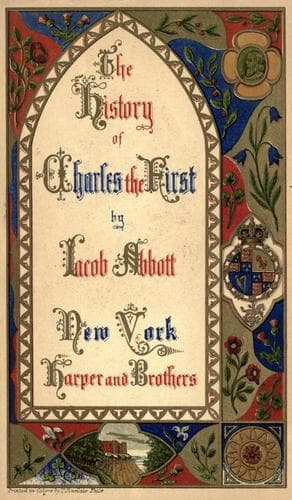
History of King Charles the First of EnglandAbbott, Jacob
History
History of King Charles the First of England
Abbott, Jacob
Charles I, King of England, 1600-1649; Great Britain -- History -- Charles I, 1625-1649; Great Britain -- Kings and rulers -- Biography
James immediately conceived the design of going himself in pursuit of
her. But knowing very well that all his ministers and the officers of
his government would make endless objections to his going out of the
country on such an errand, he kept his plan a profound secret from them
all. He ordered some ships to be got ready privately, and provided a
suitable train of attendants, and then embarked without letting his
people know where he was going. He sailed across the German Ocean to
the town in Norway where his bride had landed. He found her there, and
they were married. Her brother, who had just succeeded to the throne,
having received intelligence of this, invited the young couple to
come and spend the winter at his capital of Copenhagen; and as the
season was far advanced, and the sea stormy, King James concluded to
accept the invitation. They were received in Copenhagen with great pomp
and parade, and the winter was spent in festivities and rejoicings.
In the spring he brought his bride to Scotland. The whole world were
astonished at the performance of such an exploit by a king, especially
one of so mild, quiet, and grave a character as that which James had
the credit of possessing.
[Sidenote: Charles's feeble infancy.]
Young Charles was very weak and feeble in his infancy. It was feared
that he would not live many hours. The rite of baptism was immediately
performed, as it was, in those days, considered essential to the
salvation of a child dying in infancy that it should be baptized
before it died. Notwithstanding the fears that were at first felt,
Charles lingered along for some days, and gradually began to acquire
a little strength. His feebleness was a cause of great anxiety and
concern to those around him; but the degree of interest felt in the
little sufferer's fate was very much less than it would have been if
he had been the oldest son. He had a brother, Prince Henry, who was
older than he, and, consequently, heir to his father's crowns. It
was not probable, therefore, that Charles would ever be king; and the
importance of every thing connected with his birth and his welfare was
very much diminished on that account.
[Sidenote: Death of Elizabeth.]
[Sidenote: Accession of James to the English crown.]
It was only about two years after Charles's birth that Queen Elizabeth
died, and King James succeeded to the English throne. A messenger came
with all speed to Scotland to announce the fact. He rode night and
day. He arrived at the king's palace in the night. He gained admission
to the king's chamber, and, kneeling at his bedside, proclaimed him
King of England. James immediately prepared to bid his Scotch subjects
farewell, and to proceed to England to take possession of his new
realm. Queen Anne was to follow him in a week or two, and the other
children, Henry and Elizabeth; but Charles was too feeble to go.
[Sidenote: 1603.]
[Sidenote: Second sight.]
[Sidenote: Prediction fulfilled.]
Public-domain text, read in full here on John Shaqi.
Reviews
Reviews
No reviews yet
Be the first to share your thoughts on this work.
Join the Discussion
Join the discussion
Sign in to leave a comment or review.
Sign InorCreate an account