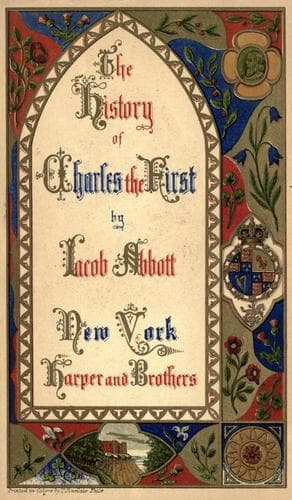
History of King Charles the First of EnglandAbbott, Jacob
History
History of King Charles the First of England
Abbott, Jacob
Charles I, King of England, 1600-1649; Great Britain -- History -- Charles I, 1625-1649; Great Britain -- Kings and rulers -- Biography
He was chosen a member of Parliament again, and he returned to his seat
more powerful and influential than ever. Buckingham, who had been his
greatest enemy, was now dead, and the king, finding that he had great
abilities and a spirit that would not yield to intimidation or force,
concluded to try kindness and favors.
[Sidenote: Wentworth is courted.]
[Sidenote: He goes over to the king.]
In fact, there are two different modes by which sovereigns in all ages
and countries endeavor to neutralize the opposition of popular leaders.
One is by intimidating them with threats and punishments, and the other
buying them off with appointments and honors. Some of the king's high
officers of state began to cultivate the acquaintance of Wentworth, and
to pay him attentions and civilities. He could not but feel gratified
with these indications of their regard. They complimented his talents
and his powers, and represented to him that such abilities ought to be
employed in the service of the state. Finally, the king conferred upon
him the title of baron. Common gratitude for these marks of distinction
and honor held him back from any violent opposition to the king. His
enemies said he was bought off by honors and rewards. No doubt he was
ambitious, and, like all other politicians, his supreme motive was love
of consideration and honor. This was doubtless his motive in what he
had done in behalf of the Parliament. But all that he could do as a
popular leader in Parliament was to acquire a general ascendency over
men's minds, and make himself a subject of fame and honor. All places
of real authority were exclusively under the king's control, and he
could only rise to such stations through the sovereign's favor. In a
word, he could acquire only _influence_ as a leader in Parliament,
while the king could give him _power_.
[Sidenote: The king appoints Wentworth to office.]
Kings have always, accordingly, a great control over the minds of
legislators by offering them office; and King Charles, after finding
that his first advances to Wentworth were favorably received, appointed
him one of his Privy Council. Wentworth accepted the office. His former
friends considered that in doing this he was deserting them, and
betraying the cause which he had at first espoused and defended. The
country at large were much displeased with him, finding that he had
forsaken their cause, and placed himself in a position to act against
them.
Public-domain text, read in full here on John Shaqi.
Reviews
Reviews
No reviews yet
Be the first to share your thoughts on this work.
Elsewhere in the archive
Join the Discussion
Join the discussion
Sign in to leave a comment or review.
Sign InorCreate an account