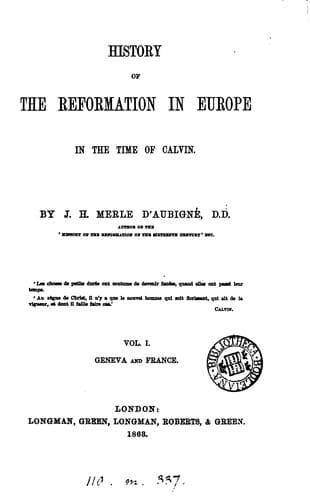
History of the Reformation in Europe in the Time of Calvin, Vol. 6 (of 8)Merle d'Aubigné, J. H. (Jean Henri)
History
History of the Reformation in Europe in the Time of Calvin, Vol. 6 (of 8)
Merle d'Aubigné, J. H. (Jean Henri)
Reformation
[Sidenote: OPPONENTS OF COMPULSION.]
The citizens thus lightly banished from their native land by the
council could hardly believe their own ears. What! they had delivered
Geneva, ‘and will Geneva drive them away?’ Is it resolved that they
must forsake their homes, their families, their friends, to go and
eat the bread of the stranger? They murmured aloud and stoutly stood
out against this strange edict, confident in their strength and their
number. ‘There was no obedience at all;’ no one thought of packing
up. ‘The hostile band was of such a character that the lords dared
not execute their own decree.’ Complaints and threats grew louder
from day to day. The most influential men exclaimed--‘The present
syndics were elected by means of underhand dealings and intrigues.
They have violated our franchises and made an attack on our liberties.
There are three or four among them who do just as they will with the
ordinary council, and even with the great council. We must take the
government of the republic out of the hands of these two councils, and
henceforth everything must be managed by a general council. These
gentlemen want to reign over us as princes; but it is the people, it
is we ourselves, who are princes.’ These powerful malcontents, among
whom De Chapeaurouge distinguished himself, sought even to gain over
those of their friends who had already taken the oath, and addressed to
them the most vehement reproaches. Many of the latter were shaken, and
sought to excuse themselves. They laid the blame on the secretary of
the town. They reprimanded him (_l’impropéraient_) and blamed him for
getting them to swear without knowing what they were doing. Some even
of those who had sworn ‘adhered to the rebels.’ All these malcontents
excited one another more and more, and they thought of nothing but of
securing for themselves at the next election the place of the syndics.
The authoritative act of the council was to bring about the revolution.
Public-domain text, read in full here on John Shaqi.
Reviews
Reviews
No reviews yet
Be the first to share your thoughts on this work.
Elsewhere in the archive
Join the Discussion
Join the discussion
Sign in to leave a comment or review.
Sign InorCreate an account