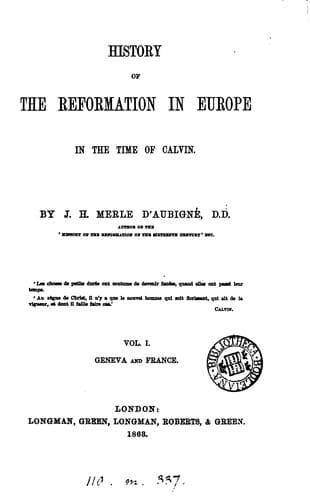
History of the Reformation in Europe in the Time of Calvin, Vol. 6 (of 8)Merle d'Aubigné, J. H. (Jean Henri)
History
History of the Reformation in Europe in the Time of Calvin, Vol. 6 (of 8)
Merle d'Aubigné, J. H. (Jean Henri)
Reformation
fashions and manners of living. If you do not, I will send six of the
proudest of you unto my uncle of England,[231] and after he has put
them in order, I will do the same with the rest if they will not
amend.’ The chancellor, in consternation, humbly answered, ‘One word
of your grace’s mouth shall suffice them to be at commandment.’ James
rejoined immediately and angrily, ‘I shall gladly bestow any words of
my mouth that can amend them,’ The notion of applying to Henry VIII.
to set his bishops right was original; and the prelates of Scotland,
knowing that that preceptor did not spare the rod nor even the sword,
trembled to the very marrow of their bones. Ballenden, in confirmation
of these new intentions of James, said to Thomas Eure, ‘The king is
fully minded to expel all spiritual men from having any authority by
office under his grace, either in household or elsewhere.’ It appears
that the author of the drama, author also in part of the change wrought
in the prince, was Sir David Lyndsay, who had been the king’s guardian
and companion during his minority. This bold man of letters composed
many satires against the superstitions of the age, and above all
against the ignorance and licentiousness of the clergy; but the king
never allowed the cardinal to lift a finger to harm him.
The convictions of James were not very deep, and his own life was not
such as to give him the right to criticise the lives of the bishops. So
long as this liberal humor of the prince lasted, the cardinal seems to
have abstained from demonstrations hostile to the reform of the Church.
He was sure of getting him to change his mind, and he did not trouble
himself about comedies to which he was bent on replying by tragedies.
He was not long in showing his inflexibility, and the capricious humor
of the king again bent under his immovable firmness. Other men have
been named great, just, or well-bred. Beatoun deserved to be called
persecutor. This surname, which history inflicts on him as a disgrace,
he seems to have aspired to as a glory.
[Sidenote: SIR JOHN BORTHWICK.]
Public-domain text, read in full here on John Shaqi.
Reviews
Reviews
No reviews yet
Be the first to share your thoughts on this work.
Elsewhere in the archive
Join the Discussion
Join the discussion
Sign in to leave a comment or review.
Sign InorCreate an account