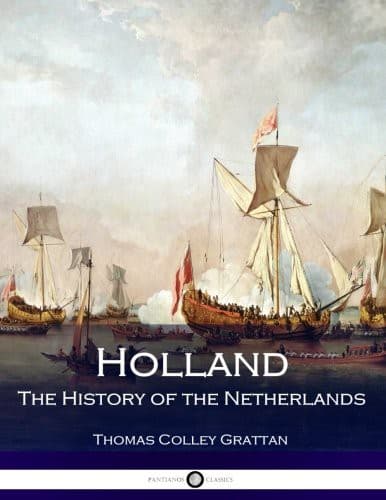
Holland: The History of the NetherlandsGrattan, Thomas Colley
History
Holland: The History of the Netherlands
Grattan, Thomas Colley
Netherlands -- History
They had no doubt often measured their strength in the most remote
times, since the Franks were but the descendants of the ancient
tribes of Sicambers and others, against whom the Batavians had
offered their assistance to Cæsar. Under Augustus, the inhabitants
of the coast had in the same way joined themselves with Drusus,
to oppose these their old enemies. It was also after having been
expelled by the Frisons from Guelders that the Salians had passed
the Rhine and the Meuse; but, in the fourth century, the two
peoples, recovering their strength, the struggle recommenced,
never to terminate--at least between the direct descendants of
each. It is believed that it was the Varni, a race of Saxons
nearly connected with those of England (and coming, like them,
from the coast of Denmark), who on this occasion struck the decisive
blow on the side of the Saxons. Embarking on board a numerous
fleet, they made a descent in the ancient isle of the Batavians,
at that time inhabited by the Salians, whom they completely
destroyed. Julian the Apostate, who was then with a numerous
army pursuing his career of early glory in these countries,
interfered for the purpose of preventing the expulsion, or at
least the utter destruction, of the vanquished; but his efforts
were unavailing. The Salians appear to have figured no more in
this part of the Low Countries.
The defeat of the Salians by a Saxon tribe is a fact on which no
doubt rests. The name of the victors is, however, questionable.
The Varni having remained settled near the mouths of the Rhine
till near the year 500, there is strong probability that they
were the people alluded to. But names and histories, which may on
this point appear of such little importance, acquire considerable
interest when we reflect that these Salians, driven from their
settlement, became the conquerors of France; that those Saxons
who forced them on their career of conquest were destined to
become the masters of England; and that these two petty tribes,
who battled so long for a corner of marshy earth, carried with
them their reciprocal antipathy while involuntarily deciding
the destiny of Europe.
The defeat of the Franks was fatal to those peoples who had become
incorporated with the Romans; for it was from them that the exiled
wanderers, still fierce in their ruin, and with arms in their hands,
demanded lands and herds; all, in short, which they themselves had
lost. From the middle of the fourth century to the end of the
fifth, there was a succession of invasions in this spirit, which
always ended by the subjugation of a part of the country; and which
was completed about the year 490, by Clovis making himself master
of almost the whole of Gaul. Under this new empire not a vestige
of the ancient nations of the Ardennes was left. The civilized
population either perished or was reduced to slavery, and all
the high grounds were added to the previous conquests of the
Salians.
Public-domain text, read in full here on John Shaqi.
Reviews
Reviews
No reviews yet
Be the first to share your thoughts on this work.
Join the Discussion
Join the discussion
Sign in to leave a comment or review.
Sign InorCreate an account