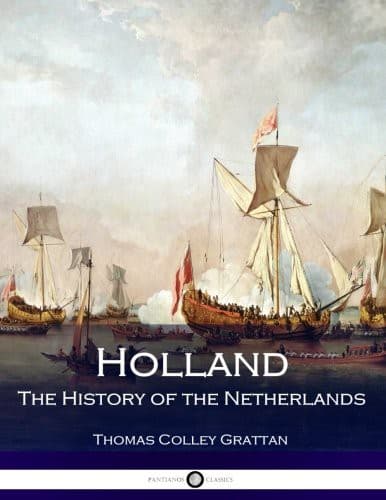
Holland: The History of the NetherlandsGrattan, Thomas Colley
History
Holland: The History of the Netherlands
Grattan, Thomas Colley
Netherlands -- History
William's death filled Holland with mourning and alarm. The meeting
of the states-general after this sad intelligence was of a most
affecting description; but William, like all master-minds, had
left the mantle of his inspiration on his friends and followers.
Heinsius, the grand pensionary, followed up the views of the
lamented stadtholder with considerable energy, and was answered
by the unanimous exertions of the country. Strong assurances
of support from Queen Anne, William's successor, still further
encouraged the republic, which now vigorously prepared for war.
But it did not lose this occasion of recurring to the form of
government of 1650. No new stadtholder was now appointed; the
supreme authority being vested in the general assembly of the
states, and the active direction of affairs confided to the grand
pensionary. This departure from the form of government which had
been on various occasions proved to be essential to the safety,
although at all times hazardous to the independence, of the States,
was not attended with any evil consequences. The factions and
the anarchy which had before been the consequence of the course
now adopted were prevented by the potent influence of national
fear lest the enemy might triumph, and crush the hopes, the
jealousies, and the enmities of all parties in one general ruin.
Thus the common danger awoke a common interest, and the splendid
successes of her allies kept Holland steady in the career of
patriotic energy which had its rise in the dread of her redoubtable
foe.
Public-domain text, read in full here on John Shaqi.
Reviews
Reviews
No reviews yet
Be the first to share your thoughts on this work.
Elsewhere in the archive
Join the Discussion
Join the discussion
Sign in to leave a comment or review.
Sign InorCreate an account