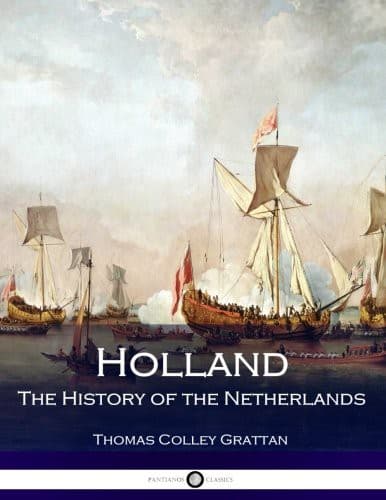
Holland: The History of the NetherlandsGrattan, Thomas Colley
History
Holland: The History of the Netherlands
Grattan, Thomas Colley
Netherlands -- History
other arguments, artfully modified to distract the people, were
urged by the new bishops in the Netherlands, and by those whom
they employed to arrest the progress of reform.
Among the various causes of the general confusion, the situation
of Brabant gave to that province a peculiar share of suffering.
Brussels, its capital, being the seat of government, had no
particular chief magistrate, like the other provinces. The executive
power was therefore wholly confided to the municipal authorities
and the territorial proprietors. But these, though generally
patriotic in their views, were divided into a multiplicity of
different opinions. Rivalry and resentment produced a total want
of union, ended in anarchy, and prepared the way for civil war.
William of Nassau penetrated the cause, and proposed the remedy
in moving for the appointment of a provincial governor. This
proposition terrified Granvelle, who saw, as clearly as did his
sagacious opponent in the council, that the nomination of a special
protector between the people and the government would have paralyzed
all his efforts for hurrying on the discord and resistance which
were meant to be the plausible excuses for the introduction of
arbitrary power. He therefore energetically dissented from the
proposed measure, and William immediately desisted from his demand.
But he at the same time claimed, in the name of the whole country,
the convocation of the states-general. This assembly alone was
competent to decide what was just, legal, and obligatory for
each province and every town. Governors, magistrates, and simple
citizens, would thus have some rule for their common conduct;
and the government would be at least endowed with the dignity
of uniformity and steadiness. The ministers endeavored to evade
a demand which they were at first unwilling openly to refuse.
But the firm demeanor and persuasive eloquence of the Prince
of Orange carried before them all who were not actually bought
by the crown; and Granvelle found himself at length forced to
avow that an express order from the king forbade the convocation
of the states, on any pretext, during his absence.
Public-domain text, read in full here on John Shaqi.
Reviews
Reviews
No reviews yet
Be the first to share your thoughts on this work.
Elsewhere in the archive
Join the Discussion
Join the discussion
Sign in to leave a comment or review.
Sign InorCreate an account